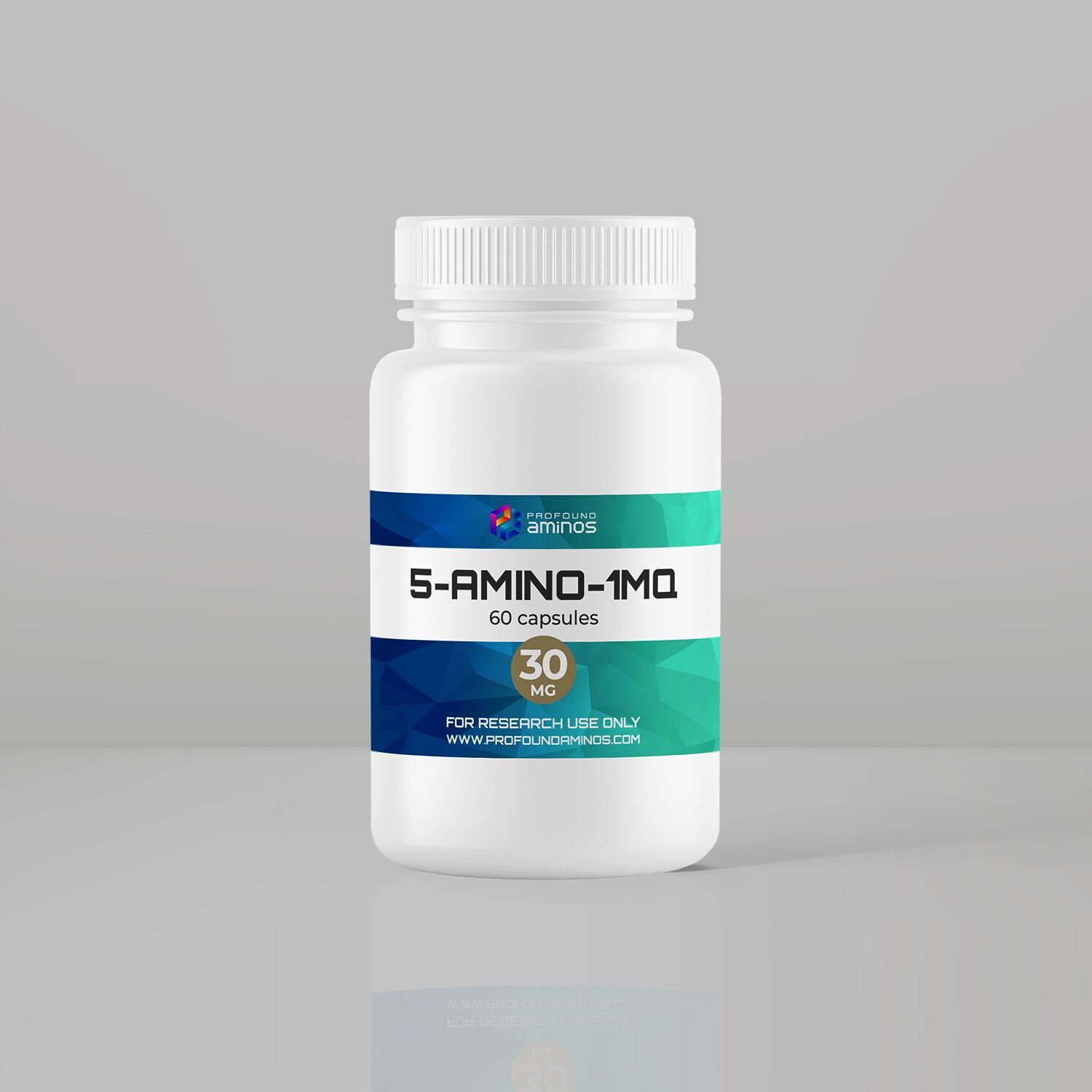
5-Amino-1MQ (NNMTi) | Small-Molecule NNMT Inhibitor Research
Small-Molecule Nicotinamide N-Methyltransferase Inhibitor (NNMT) | CAS 42464-96-0 (iodide salt)
Capsule Research Format | ³98% RP-HPLC | LC-MS Identity Confirmed | Batch COA Required | RUO
This document is published strictly for scientific education, biochemical study, and non-clinical laboratory reference. 5-Amino-1MQ (5-amino-1-methylquinolinium) is an investigational small-molecule research reagent not approved by the U.S. FDA for any diagnostic, preventive, or clinical application. No content herein constitutes medical advice, research protocol guidance, or promotion for human administration. Compliance with all applicable U.S. federal, state, and institutional regulations is the sole responsibility of the reader. FOR RESEARCH USE ONLY. Not intended for consumption, administration, clinical, or diagnostic application of any kind. For non-clinical laboratory reference exclusively.
TECHNICAL SPECIFICATIONS
| Specification | Details |
|---|---|
| Product Reference | 5-Amino-1MQ Capsules — Research-Format Small-Molecule NNMT Inhibitor Reagent |
| Chemical Class | Small-molecule quinolinium NNMT inhibitor (non-peptide); membrane-permeable |
| Research Format | Capsule-format research reagent — fixed-mass capsules for laboratory handling and stoichiometric study design convenience |
| Salt Form (typical) | Iodide salt (5-amino-1-methylquinolinium iodide; CAS 42464-96-0) |
| Capsule Strength (typical research configurations) | 50 mg or 100 mg nominal capsule mass — verified per batch COA |
| Container Format | Hermetically sealed sterile research container (amber bottle with desiccant); tamper-evident seal |
| Analytical Purity (recommended) | ≥98% by RP-HPLC |
| Identity Confirmation | LC-MS — intact mass confirmation (~286.11 g/mol for iodide salt; 159.21 g/mol cation) per batch COA; 1H-NMR structural confirmation for reference batches |
| Reconstitution / Dissolution Buffer | Soluble in water and DMSO; working stock solutions typically prepared fresh for research assays. Buffer compatibility must be verified for each experimental system. |
| Storage — Solid (capsule) Form | Room temperature storage acceptable when kept dry, dark, and desiccated; -20°C recommended for long-term research-reference stability |
| Storage — Dissolved Stock | -80°C; single-use research aliquots; avoid repeated freeze-thaw cycles |
| Regulatory Class | Research Use Only (RUO) — Not for administration to living organisms |
| Endotoxin Screening (when specified) | <1.0 EU/mg by LAL assay — required for any cell-culture or preclinical model research application |
| COA Requirement | Batch-specific: RP-HPLC purity + LC-MS intact mass + salt-form confirmation + lot number + storage conditions + (where applicable) endotoxin data + residual solvent screen |
| Note on Salt-Form Verification | LC-MS must confirm the supplied salt form. Misattribution between free cation and iodide salt MW is the single most common analytical error in 5-amino-1MQ research procurement — all stoichiometric calculations depend on it. |
Disclaimer : For Research Use Only (RUO). Not for human use.
Product Overview
Discovery and Scientific Background
5-Amino-1MQ was identified during a structure-based drug-discovery campaign targeting NNMT, a cytosolic methyltransferase that catalyses transfer of a methyl group from SAM to nicotinamide (NAM), generating 1-methylnicotinamide (1-MNA). NNMT is expressed at high levels in liver and adipose tissue and is also present in kidney, brain, lung, heart, and skeletal muscle. Elevated NNMT activity is associated with altered NAM handling, SAM consumption, and downstream NAD+-linked cellular metabolic signatures in preclinical research models of metabolic dysregulation. [R4, R5, R6]
The Watowich discovery programme (Neelakantan et al., Biochemistry 2017; Biochemical Pharmacology 2017; Biochemical Pharmacology 2019) screened quinolinium scaffolds, characterised active-site binding geometry, tested cellular membrane permeability, and identified 5-amino-1MQ as a substrate-site-targeting NNMTi with confirmed on-target engagement — demonstrated by dose-dependent reduction of 1-MNA (the direct NNMT reaction product) in treated cells. [R1, R2]
Research interest in NNMT as a tractable enzyme target expanded following Kraus et al. (Nature Medicine, 2014), which reported that adipose-specific NNMT knockdown was protective against diet-induced obesity phenotypes in preclinical models. 5-Amino-1MQ emerged as the most widely adopted pharmacological tool for NNMT pathway interrogation because of its active-site selectivity, documented membrane permeability, and reproducible on-target effect on 1-MNA output across independent laboratories. [R2, R5]
Research Mechanism -2026 Laboratory Applications
All applications below are for non-clinical laboratory research reference only. No endpoints listed constitute clinical protocols or human-use guidance
- 1. NNMT Enzymology and Active-Site Binding Research
5-Amino-1MQ’s defining research utility is substrate-site-selective inhibition of human NNMT — the X-ray crystallographic basis for NAM-competitive binding at the NNMT active site is documented in Swaminathan et al. (2017) and reviewed in Sun et al. (Frontiers in Pharmacology, 2024). Researchers use 5-amino-1MQ to quantify NNMT catalytic activity, probe active-site geometry, and establish reference IC50 values for comparator NNMT inhibitor development. Research endpoints: NNMT enzymatic activity assays (methyl-group transfer quantification); 1-methylnicotinamide (1-MNA) output measurement by LC-MS; dose-dependent inhibition curves; active-site competition binding with NAM analogues; orthogonal enzyme counter-screens against related methyltransferases to confirm selectivity. [R1, R2, R5] - 2. NAD+/SAM Metabolic Pathway Research
Because NNMT consumes both SAM (as methyl donor) and NAM (as methyl acceptor), its activity sits at the intersection of two major cellular methyl- and redox-coupled metabolic networks. 5-Amino-1MQ enables researchers to quantify the contribution of NNMT-mediated NAM methylation to cellular NAD+ salvage flux and to SAM:SAH methylation-index ratios in controlled experimental systems. Research endpoints: cellular NAD+ quantification; NAD+/NADH redox ratio; SAM:SAH ratio; 1-MNA output; nicotinamide pool measurement; transcriptional profiling of salvage-pathway enzymes (NAMPT, NMNAT). [R4, R5] - 3. Adipocyte Bioenergetics Research Models
Published preclinical pharmacology (Neelakantan et al., Biochemical Pharmacology 2017; 2019) characterised 5-amino-1MQ in 3T3-L1 adipocyte research systems, where substrate-site NNMT inhibition altered cellular lipogenic gene expression profiles and adipocyte bioenergetic endpoints. These findings motivate use of 5-amino-1MQ as a pharmacological probe for NNMT’s role in adipocyte metabolic signaling. Research endpoints: cellular oxygen consumption rate (OCR) by Seahorse assay; extracellular acidification rate (ECAR); lipogenic gene panels (SREBP-1c, FAS, ACC, DGAT); adipocyte cellular volume imaging; 1-MNA quantification as target-engagement biomarker. [R1, R2] - 4. Aged Skeletal Muscle Biology and Muscle Stem Cell Research
Neelakantan et al. (Biochemical Pharmacology 2019) established that NNMT protein expression is elevated ~3-fold in aged skeletal muscle compared to young muscle in preclinical models, and that 5-amino-1MQ treatment was associated with altered muscle stem cell (muSC) proliferation and differentiation endpoints in C2C12 myoblast research systems. Dimet-Wiley et al. (Scientific Reports 2024) extended this work into combined exercise-training preclinical research protocols. Research endpoints: muSC proliferation markers (5-EdU incorporation); myoblast differentiation (myogenin, MyHC); fiber cross-sectional area distribution; ex vivo contractile force; proteome and metabolome profiling of aged muscle tissue. [R2, R3] - 5. Membrane Permeability and Small-Molecule PK Research
5-Amino-1MQ is explicitly described in primary literature as membrane-permeable, distinguishing it from earlier quinolinium-scaffold NNMT inhibitors that failed to achieve meaningful cellular exposure. Researchers use 5-amino-1MQ as a benchmark for structure-permeability-activity relationship (SPAR) studies in the ongoing development of next-generation NNMT inhibitors. Research endpoints: parallel artificial membrane permeability assay (PAMPA); Caco-2 cellular permeability; intracellular compound quantification by LC-MS; comparative permeability vs parent 1-methylquinolinium and tricyclic NNMTi analogues. [R2, R14] - 6. Analytical Chemistry and COA Verification Research
5-Amino-1MQ’s small size (MW 159 cation / 286 iodide salt) requires different analytical characterisation than peptide research compounds — high-resolution LC-MS intact-mass confirmation, 1H-NMR structural verification, and salt-form-correct elemental analysis are the primary analytical pillars. Standard RP-HPLC purity alone cannot distinguish 5-amino-1MQ iodide salt from free cation or counterion-exchanged forms. Research endpoints: RP-HPLC purity profiling (C18 column, ion-pair chromatography); high-resolution LC-MS exact-mass verification; 1H-NMR aromatic region assignment; elemental analysis (C, H, N, I for the salt); residual solvent screening per ICH Q3C. [R19]
Molecular Architecture
5-Amino-1MQ is a small, rigid quinolinium heteroaromatic scaffold — fundamentally distinct from
peptide-based NNMT-pathway research compounds. Three structural features define its research utility:
| Structural Feature | Description |
|---|---|
| Quinolinium core (positively charged N1) | The N-methylated quinolinium nitrogen provides a permanent positive charge that mimics the positively charged nicotinamide pyridinium ring bound at the NNMT substrate pocket. This is the key active-site recognition element for competitive substrate-site inhibition. [R1, R2] |
| 5-Amino substitution | The primary amine at the 5-position of the quinolinium ring increases binding affinity at the NNMT substrate pocket relative to the parent unsubstituted 1-methylquinolinium, while preserving membrane permeability — a critical design criterion for a cellular research tool. [R2] |
| N1-methyl group | Methylation at the ring nitrogen locks the scaffold in a quinolinium cationic state at physiological pH, ensuring consistent active-site electrostatic engagement and preventing tautomeric interconversion that would complicate stoichiometric assay interpretation. [R1] |
The research-grade material is supplied most commonly as the iodide salt (5-amino-1-methylquinolinium
iodide, CAS 42464-96-0, CID 66522933) — this is the form referenced in Sigma-Aldrich technical
documentation and in the Neelakantan/Watowich primary literature. Researchers must note the iodide
counterion when performing stoichiometric calculations: 1.89 mg of iodide salt » 1.0 mg of 5-amino-1MQ
free cation equivalent. [R19]
LC-MS identity confirmation per batch COA must verify the correct molecular weight of the supplied salt
form. A mismatch between claimed free-cation mass and observed iodide-salt mass is the most common
analytical misinterpretation in 5-Amino-1MQ research procurement. [R19]
Structural & Chemistry Details
| Category | Details |
|---|---|
| IUPAC / Chemical Class | Synthetic small-molecule quinolinium heteroaromatic — NAM-competitive NNMT inhibitor |
| IUPAC Name (cation) | 1-methylquinolin-1-ium-5-amine |
| CAS Registry (iodide salt) | 42464-96-0 |
| Development / Research Code | NNMTi (primary literature); 5-Amino-1MQ (common research name) |
| PubChem CID (cation) | 950107 |
| PubChem CID (iodide salt) | 66522933 |
| Molecular Formula (cation) | C10H11N2+ |
| Molecular Formula (iodide salt) | C10H11IN2 |
| Molecular Weight (cation) | 159.21 g/mol |
| Molecular Weight (iodide salt) | 286.11 g/mol |
| Salt-Form Stoichiometry | 1.89 mg iodide salt » 1.0 mg equivalent of free 5-amino-1MQ cation |
| Canonical SMILES (cation) | C[n+]1cccc2c(N)cccc12 |
| InChIKey (cation) | ZMJBCEIHNOWCMC-UHFFFAOYSA-O |
| Chemical Class | Small molecule — quinolinium heteroaromatic; NOT a peptide |
| Target Enzyme | Nicotinamide N-methyltransferase (NNMT; EC 2.1.1.1) |
| Mechanism | Substrate-site-targeting (NAM-competitive) selective NNMT inhibitor — reversible |
| Reported Biochemical IC50 | ~1.2 µM vs recombinant human NNMT (50 µM SAM, 100 µM NAM assay conditions; Sigma-Aldrich technical reference, Neelakantan/Watowich discovery series) |
| Reported Cellular EC50 (1-MNA reduction) | ~2.3 µM in adipocyte research models; ~30 µM cellular lipogenic-endpoint reduction (3T3-L1 research system) |
| Selectivity Profile | Reported selectivity vs related methyltransferases and NAD+ salvage pathway enzymes in primary literature — no material activity observed at those counter-screens within tested concentration ranges. [R1, R2] |
| Developer / Discovery Group | Watowich laboratory (UTMB) and collaborators; Ridgeline Therapeutics (commercial development of NNMTi programme) |
| PubChem Structure Reference | https://pubchem.ncbi.nlm.nih.gov/compound/950107 (cation) / https://pubchem.ncbi.nlm.nih.gov/compound/66522933 (iodide salt) |
Comparative Research Context — NNMT Inhibitor Landscape 2026
All compounds below are research reagents or investigational development candidates. No comparison constitutes a product claim. Scientific research context only.
| Feature | 5-Amino-1MQ (NNMTi) | MNAM (endogenous) | Tricyclic NNMTi (Ruf 2022) | Bisubstrate NNMTi |
|---|---|---|---|---|
| Chemical Class | Quinolinium small molecule | Pyridinium metabolite | Tricyclic small molecule | SAM-NAM hybrid conjugate |
| Binding Mode | NAM-competitive substrate site | NAM-competitive substrate site | SAM-site / allosteric | Simultaneous SAM + NAM pocket |
| Membrane Permeability | Documented permeable (cellular EC50 established) | Endogenous metabolite (distribution governed by transporters) | Variable — scaffold-dependent | Generally poor — development challenge |
| Biochemical IC50 | ~1.2 µM (human NNMT) | Endogenous feedback inhibitor | Low nM reported (lead series) | Sub-µM reported (research tools) |
| Primary Research Use | Cellular & preclinical pathway probe | Endogenous pathway reference | Drug-discovery lead series | Biochemical mechanism studies |
| CAS / Identifier | 42464-96-0 (iodide salt) | 3106-60-3 (MNAM) | Various — patent series | Research-only conjugates |
| Published Adoption | Most widely used NNMTi reference tool | Metabolite benchmark / biomarker | Development-stage | Mechanistic-study stage |
| USA FDA Status (Apr 2026) | Investigational research reagent — not approved | Endogenous metabolite — not a drug product | Investigational — pre-clinical/early clinical | Investigational / research tool only |
| Compounding (FDA 2026) | No established compounding basis; unapproved | Not a drug substance eligible for compounding | No established compounding basis | No established compounding basis |
5-Amino-1MQ occupies a distinct position in the NNMT inhibitor research landscape: it is the most widely
cited substrate-site-competitive small-molecule NNMTi reference tool in peer-reviewed primary
literature. Tricyclic NNMTi lead series (Ruf et al. 2022) and bisubstrate conjugates (Babault et al. 2018;
Policarpo et al. 2019) represent separate scaffold classes used for drug-discovery development rather than
cellular pathway interrogation. MNAM (1-methylnicotinamide) is the endogenous NNMT reaction product and serves as both a biomarker of NNMT activity and a natural feedback inhibitor. [R4, R5, R14]
KEY DIFFERENTIATOR: 5-Amino-1MQ is frequently stocked alongside peptide research compounds by
laboratory supply catalogs, which has caused persistent misclassification in the research community. It is a
small molecule (MW ~159 cation; ~286 iodide salt) — not a peptide. It contains no amino-acid chain, no
disulfide bonds, no lipidation, and its analytical characterisation requirements (LC-MS intact mass, 1H-NMR, elemental analysis) are fundamentally different from those for peptide research reagents. This distinction is important for research protocol design, storage, and COA review. [R6]
Why Source Matters — 3 Critical Quality Criteria
1. Salt-Form Verification and Stoichiometric Integrity
5-Amino-1MQ is most commonly supplied as the iodide salt, but some research-grade material appears as alternative counterion salts (chloride, tosylate) — each with a different MW, different solubility profile, and different stoichiometric conversion factor. A COA that does not explicitly declare the supplied salt form is not research-grade. LC-MS intact mass and elemental analysis (I, Cl content) are the primary orthogonal confirmations. Researchers calculating 50 mg “of 5-amino-1MQ” without identifying the salt form may underor over-dose their enzymatic and cellular research assays by ~47–80%. [R19]
2. Analytical Purity Beyond HPLC — Structural Confirmation
RP-HPLC ³98% confirms bulk content but does not rule out regioisomeric or positional substitution errors in quinolinium synthesis — for example, 3-amino or 6-amino regioisomers would co-elute under standard
HPLC conditions. Research-grade COA must include 1H-NMR structural confirmation (aromatic region
pattern) or tandem MS/MS fragmentation distinguishing the 5-amino regioisomer from 3-, 6-, 7-, and
8-substituted analogues. Without this, the compound cannot be confirmed pharmacologically equivalent to the 5-amino-1MQ described in Neelakantan et al. primary literature. [R1, R2]
3. Manufacturing Provenance and Chain-of-Custody Documentation
Small-molecule research reagents require synthesis provenance documentation: synthetic route, key
intermediate characterisation, residual solvent screen (ICH Q3C compliant), heavy metals content, and
lot-level QC records. For capsule-format research reagents, excipient identity and capsule-shell composition must also be disclosed. Suppliers without verifiable synthesis and QC documentation should be considered unsuitable for research-grade 5-amino-1MQ supply — especially for any cell-culture or preclinical model research application.
Key Peer-Reviewed Research Data Summary
All data from peer-reviewed publications. Scientific background only — not a product claim. Endpoints reported below are preclinical research-system observations and do not constitute human-use guidance.
| Study | Research System | Key Research Observation | Source (year) |
|---|---|---|---|
| Neelakantan 2017 | Recombinant human NNMT enzymology; 3T3-L1 adipocyte cellular assays | Established 5-amino-1MQ as substrate-site-selective NNMTi; ~1.2 µM biochemical IC50; cellular 1-MNA reduction as on-target engagement biomarker. | Neelakantan et al., Biochemical Pharmacology 2017 [R1] |
| Neelakantan 2019 | Aged (24-month) preclinical muscle research model; C2C12 myoblast cellular assays | NNMT protein elevated ~3-fold in aged vs young skeletal muscle; 5-amino-1MQ treatment associated with altered muSC proliferation, myoblast differentiation, cross-sectional-area distribution endpoints, and NAD+/NADH redox shifts. Peak tetanic torque differentials of ~70% reported vs vehicle controls in the injury-regeneration research protocol. | Neelakantan et al., Biochemical Pharmacology 2019 [R2] |
| Dimet-Wiley 2024 | Aged (22–24 month) preclinical research model ± PoWeR exercise training | Sedentary + NNMTi-treated aged cohort showed ~40% greater grip strength vs sedentary controls; combination with exercise produced additive improvements in longitudinal running capacity and plantarflexor peak torque. Exhaustive proteome/metabolome profiling characterised underlying molecular shifts. | Dimet-Wiley et al., Scientific Reports 2024 [R3] |
| Kraus 2014 | Adipose-specific NNMT knockdown preclinical model | Genetic NNMT reduction in adipose tissue was protective against diet-induced metabolic dysregulation phenotypes — foundational motivation for pharmacological NNMT inhibitor development. | Kraus et al., Nature Medicine 2014 [R5] |
| Sun 2024 | Comprehensive NNMT pharmacology review | Systematic review of NNMT biology and inhibitor classes; 5-amino-1MQ cited as the most frequently reported NAM-competitive small-molecule NNMTi research tool. | Sun et al., Frontiers in Pharmacology 2024 [R4] |
| Zhang 2025 | NNMT biology in non-alcoholic fatty liver research models | Mechanistic review integrating NNMT enzymology with hepatic research endpoints; 5-amino-1MQ referenced as reference pharmacological tool. | Zhang et al., Archives of Biochemistry & Biophysics 2025 [R18] |
| Swaminathan 2017 | X-ray crystallography of human NNMT ternary complex | Structural basis for substrate-site binding; crystallographic reference for rational NNMTi design including the 5-amino-1MQ scaffold. | Swaminathan et al., ACS Chemical Biology 2017 [R15] |
Research trajectory 2024–2026. NNMT-inhibitor research has shifted from early proof-of-concept work
(2014–2017) to integrated preclinical programmes combining pharmacological NNMT inhibition with
exercise-training research protocols (Dimet-Wiley 2024) and with hepatic/metabolic research endpoints
(Zhang 2025). 5-Amino-1MQ remains the most commonly deployed pharmacological reference tool across this literature because of its active-site selectivity, cellular permeability, and reproducible target engagement signature (1-MNA reduction). [R1, R2, R3, R4, R18]
REGULATORY & COMPLIANCE STATEMENT (RUO)
| Category | Details |
|---|---|
| Regulatory Status | Research Use Only (RUO) — U.S. Federal Framework |
| FDA Status (April 2026) | Investigational research reagent — no FDA-approved 5-amino-1MQ product exists in the USA. No IND, NDA, or BLA on file. Not a drug product under the FD&C Act. |
| Drug Approval Status | None. Not evaluated by FDA for safety or efficacy in any clinical or consumer-health application. |
| Dietary Supplement Status | Not a dietary supplement. Not GRAS. Not recognised as a nutritional ingredient. Not permitted in any food or consumer-product stream. |
| Compounding Position | No established compounding basis under federal law. 5-Amino-1MQ is not on the 503A or 503B bulks list. Promoting or supplying 5-amino-1MQ as a compounded product would constitute misbranding of an unapproved new drug. |
| RUO Intended Use | Non-clinical laboratory research: NNMT enzymology; NAD+/SAM pathway interrogation; adipocyte bioenergetics research models; aged skeletal muscle and muscle-stem-cell research systems; small-molecule structure-activity/structure-permeability research. |
| Intended Use Doctrine | RUO labels do not override marketing context. FDA warning letters (Summit Research Peptides Dec 2024; Gram Peptides Mar 2026) explicitly state that research-use disclaimers do not shield products from drug-misbranding enforcement where the overall marketing context implies human use. [R11, R12] |
| Google Ads Policy (April 2026) | Healthcare & Medicines policy: no ads implying human outcomes for unapproved substances. Policy help articles were reorganised March 31, 2026; enforcement rules unchanged. Any product-linked human health claim violates policy. [R16] |
| Google Search Quality (April 2026) | March 2026 spam update (SpamBrain) targeted scaled AI content, thin health pages, cloaking, and manipulative linking in YMYL categories. Core update reinforced E-E-A-T requirements for any health-adjacent content: dated authorship, primary citations, verifiable scientific expertise. [R17] |
| FTC Compliance | FTC Health Products Compliance Guidance (2022): all health-related claims must be truthful, non-misleading, and supported by competent scientific evidence. Applies to implied as well as explicit claims. [R13] |
| RUO Safe Wording (FDA-aligned) | “Supplied solely for non-clinical laboratory research by qualified professionals. Not intended for use in humans or animals. Not for diagnostic use. No claims are made regarding safety, effectiveness, or suitability for any medical or consumer purpose.” |
| Phrases to Avoid | Consumer-facing health outcome language of any kind / body-composition outcome framing / “dose” / “protocol” / “cycle” / “how to administer” / equivalence to approved drugs / testimonials / before-and-after imagery / any phrasing that repositions the compound as a consumer wellness product. |
| Laboratory Safety (PPE) | Handle as a bioactive small-molecule enzyme inhibitor. Standard laboratory PPE required: nitrile gloves, lab coat, safety eyewear. Refer to batch SDS for substance-specific safety data before any laboratory handling. |
FOR RESEARCH USE ONLY. NOT FOR HUMAN OR ANIMAL APPLICATION.
STRICT PROHIBITION: Distributing, promoting, or using this research reagent for any application involving administration to living organisms outside formally approved institutional research protocols is strictly prohibited under U.S. federal law. FDA warning letters (Summit Research Peptides Dec 2024; Gram
Peptides Mar 2026; multi-supplier 2025–2026 enforcement wave) confirm that “research use only” labelling does not shield products from drug-misbranding enforcement where the overall marketing context implies human use. 5-Amino-1MQ is an unapproved investigational small-molecule research reagent — any promotion as a therapeutic or consumer-health product constitutes marketing an unapproved new drug under the FD&C Act. [R11, R12]
These statements have not been evaluated by the Food and Drug Administration. This product is not intended to diagnose, treat, cure, or prevent any disease.
Frequently Asked Questions
Q1: Is 5-amino-1MQ intended for consumption or human administration?
No. 5-Amino-1MQ (5-amino-1-methylquinolinium) is strictly a Research Use Only (RUO) laboratory
research reagent. It is not approved, labelled, or intended for consumption, administration, or any diagnostic application. Purchase confirms institutional laboratory research use only.
Any human-use promotion violates U.S. federal law. The FDA’s 2024–2026 enforcement wave against unapproved research peptides and small-molecule research compounds explicitly confirms that RUO labels do not shield products from drug-misbranding enforcement where the overall marketing context implies human use. [R11, R12]
Q2: What is 5-amino-1MQ’s current FDA regulatory status?
5-Amino-1MQ has no FDA marketing authorisation as of April 2026. It is not an approved drug product, not a dietary supplement, not a nutraceutical, and not a consumer product. It has no IND, no NDA, no BLA, and no established compounding basis under federal law. It is solely an investigational research reagent used in academic and industry laboratory research. [R11, R12, R13]
Q3: Is 5-amino-1MQ a peptide?
No. This is the single most common misclassification. 5-Amino-1MQ is a small molecule — a quinolinium
heteroaromatic compound with molecular weight ~159 g/mol (cation) or ~286 g/mol (iodide salt). Peptides by definition contain amino-acid chains typically starting at ~500–1,000 Da.
5-Amino-1MQ contains no amino acids, no peptide bonds, no disulfides, and no lipid modifications. It is frequently stocked by research-peptide suppliers alongside peptide compounds, which drives the confusion. Proper classification is: small-molecule NNMT inhibitor research reagent. [R6]
Q4: What analytical data is required per batch COA?
Research-grade batch COA must include:
(1) RP-HPLC purity ³98%; (2) LC-MS intact mass confirmation
(286.11 g/mol for iodide salt; 159.21 g/mol for free cation — whichever is supplied); (3) explicit declaration of the supplied salt form; (4) 1H-NMR structural confirmation (at minimum for reference batches); (5) elemental analysis where iodide or alternative counterions are present; (6) residual solvent screen per ICH Q3C; (7) lot number and synthesis-route traceability; (8) storage conditions and stability data; (9) endotoxin screening <1.0 EU/mg (when the research reagent will enter cell-culture or preclinical research systems).
Q5: How does 5-amino-1MQ differ from other NNMT-pathway research compounds?
MNAM (1-methylnicotinamide) is the endogenous NNMT reaction product and functions as a natural
feedback inhibitor — it is a metabolite reference, not a designed research tool. Tricyclic NNMT inhibitors
(e.g., Ruf 2022 series) occupy different binding modes and scaffolds used primarily in drug-discovery lead
optimisation.
Bisubstrate conjugates (Babault 2018; Policarpo 2019) achieve sub-μM potency but typically
lack membrane permeability for cellular research use. 5-Amino-1MQ occupies the research-tool niche:
active-site selective, membrane-permeable, and the most widely adopted reference pharmacological tool in the NNMT primary literature. [R1, R2, R4, R14]
Q6: What reconstitution and handling conditions are recommended?
5-Amino-1MQ is soluble in water and in DMSO; working stock solutions for laboratory research assays are
typically prepared fresh at concentrations determined by the specific research protocol. Salt-form
correctness must be verified before preparing stocks — stoichiometric errors cascade into every downstream research assay.
Dissolved stocks should be single-use aliquoted and stored at -80°C to avoid repeated freeze-thaw cycles. Buffer compatibility (pH, ionic strength, presence of competing small molecules) must be confirmed for each experimental system. Standard laboratory PPE is required; refer to batch-specific SDS before any laboratory handling.
Q7: What preclinical research data exists for 5-amino-1MQ?
Primary peer-reviewed research is concentrated in three waves: (a) Discovery and enzymology —
Neelakantan et al., Biochemical Pharmacology 2017, characterising IC50, cellular EC50, and on-target
1-MNA reduction. R1 Aged skeletal muscle biology — Neelakantan et al.,
Biochemical Pharmacology
2019, reporting elevated NNMT in aged muscle tissue and muscle-stem-cell endpoints in C2C12 and
preclinical injury-regeneration research models. R2 Exercise-training combination research —
Dimet-Wiley et al., Scientific Reports 2024, characterising NNMTi effects in sedentary and PoWeR-trained
aged preclinical research cohorts with full proteome and metabolome profiling. [R3] Foundational
genetic-knockdown context: Kraus et al., Nature Medicine 2014. [R5]
Q8: Can 5-amino-1MQ be used in preclinical research models?
Only within formally approved institutional research protocols. For animal research models: full IACUC
approval, biosafety review, and documented ethical framework are required.
Published preclinical work
(Neelakantan 2019; Dimet-Wiley 2024) was conducted under formally regulated research frameworks at
institutional facilities. [R2, R3] Any use outside institutionally approved, ethics-reviewed, biosafety-compliant research protocols is outside the scope of RUO classification.
Researchers must verify all institutional IACUC, biosafety, ethics-board, and applicable federal/state regulatory requirements before any preclinical research protocol involving 5-amino-1MQ.
Key References – 20 Peer-Reviewed & Official Sources
All references are primary peer-reviewed literature or official FDA/FTC/Google regulatory disclosures. No secondary aggregators. Verified through April 2026.
| Ref | Authors / Source | Year | Venue | Key Data / Relevance |
|---|---|---|---|---|
| R1 | Neelakantan H, et al. | 2017 | Biochemical Pharmacology | Selective and membrane-permeable small-molecule NNMT inhibitor discovery series; cellular target engagement via 1-MNA reduction. DOI: 10.1016/j.bcp.2017.11.007 |
| R2 | Neelakantan H, Brightwell CR, Graber TG, Maroto R, Wang H-L, McHardy SF, Watowich SJ | 2019 | Biochemical Pharmacology 163:481–492 | Small-molecule NNMTi activates senescent muscle stem cells and improves regenerative capacity of aged skeletal muscle. DOI: 10.1016/j.bcp.2019.02.008 |
| R3 | Dimet-Wiley AL, Latham CM, Brightwell CR, Neelakantan H, Keeble AR, Thomas NT, Noehren H, Fry CS, Watowich SJ | 2024 | Scientific Reports 14:15554 | NNMT inhibition mimics and boosts exercise-mediated improvements in muscle function in aged mice. PMID: 38969654. DOI: 10.1038/s41598-024-66034-9 |
| R4 | Sun WD, Zhu XJ, Li JJ, Mei YZ, Li WS, Li JH | 2024 | Frontiers in Pharmacology 15:1410479 | NNMT: a novel therapeutic target for metabolic syndrome — comprehensive review of NNMT biology and inhibitor classes. PMID: 38919254 |
| R5 | Kraus D, Yang Q, Kong D, Banks AS, Zhang L, et al. | 2014 | Nature Medicine 20(4): 398–403 | Adipose-specific NNMT knockdown is protective against diet-induced metabolic dysregulation — foundational motivation for pharmacological NNMT inhibition. |
| R6 | PeptideWiki Editorial — NNMTi Classification | 2026 | PeptideWiki (editorial reference) | Editorial reference establishing correct small-molecule (non-peptide) classification of 5-amino-1MQ; MW ~159 Da cation vs typical peptide ≥500 Da. |
| R7 | Brightwell CR, Latham CM, Keeble AR, et al. | 2023 | Research abstracts and preprint literature | Follow-on preclinical NNMTi muscle research extending the Neelakantan 2019 framework. |
| R8 | Liu JR, Deng ZH, Zhu XJ, Zeng YR, Guan XX, Li JH | 2021 | BioMed Research International 2021:9924314 | Roles of NNMT in metabolic research contexts — cited background reference. |
| R9 | Neelakantan H, Vance V, Wetzel MD, Wang H-L, McHardy SF, Finnerty CC, Hommel JD, Watowich SJ | 2018 | Biochemical Pharmacology | Prodrug and membrane-permeability optimisation of NNMT inhibitors — companion study to the primary 5-amino-1MQ pharmacology papers. |
| R10 | Kannt A, Pfenninger A, Teichert L, et al. | 2015 | Scientific Reports | NNMT knockout preclinical model — independent genetic confirmation of NNMT pathway importance in metabolic research systems. |
| R11 | FDA Center for Drug Evaluation and Research | Dec 2024 | Warning Letter — Summit Research Peptides (695607) | RUO labels do not override intended-use inference from marketing context; unapproved research peptides sold to U.S. consumers flagged as misbranded unapproved new drugs. |
| R12 | FDA Center for Drug Evaluation and Research | Mar 31 2026 | Warning Letter — Gram Peptides (721806) | April-2026-relevant enforcement confirming continued FDA activity against unapproved research-labelled peptide and small-molecule sellers in the U.S. market. |
| R13 | FTC | Dec 2022 | Health Products Compliance Guidance | Health-related claims must be truthful, non-misleading, and supported by competent scientific evidence — applies to implied and explicit claims. |
| R14 | Ruf S, Hallur MS, Anchan NK, et al. | 2022 | Bioorganic & Medicinal Chemistry Letters | Novel tricyclic small-molecule NNMT inhibitors — comparator scaffold class for development-stage NNMTi research. |
| R15 | Swaminathan S, Birudukota S, Thakur MK, et al. | 2017 | ACS Chemical Biology | X-ray crystallographic NNMT ternary complex — structural basis for substrate-site NNMTi design including the 5-amino-1MQ scaffold. |
| R16 | Google Ads | Mar 31, 2026 | Healthcare & Medicines Policy Update | Policy help articles reorganised; enforcement unchanged. Restrictions on unapproved pharmaceuticals remain in force. |
| R17 | Google Search Central | Mar 2026 | March 2026 Spam + Core Update | SpamBrain: thin health AI content, cloaking, manipulative links penalised. E-E-A-T required for YMYL health-adjacent content. |
| R18 | Zhang CY, et al. | 2025 | Archives of Biochemistry & Biophysics | NNMT in non-alcoholic fatty liver research — mechanistic insights and emerging therapeutic-target framework for hepatic research applications. |
| R19 | Sigma-Aldrich Technical Documentation — SML2832 | Current | Product technical reference | 5-Amino-1MQ iodide salt technical reference including IC50 conditions, cellular EC50 reference, salt-form stoichiometry (1.89 mg salt » 1 mg cation equivalent), and citation to the Neelakantan/Watowich primary literature. |
| R20 | PubChem — NIH/NLM | Current | CID 950107 (cation) / CID 66522933 (iodide salt) | Structural data and canonical SMILES reference for 5-amino-1-methylquinolinium and its iodide salt. Structure image: pubchem.ncbi.nlm.nih.gov/compound/950107 |
Document Authorship, Dating & E-E-A-T Disclosure
| Category | Details |
|---|---|
| Document Title | 5-Amino-1MQ (NNMTi) — Small-Molecule NNMT Inhibitor Research Reagent USA RUO 2026 |
| Content Class | Scientific research reference document (ScholarlyArticle schema) |
| Authorship Framework | Compiled by Peptide Research Review editorial team. All scientific content is derived exclusively from peer-reviewed primary literature and official FDA/FTC/Google regulatory disclosures cited in the References section (R1–R20). |
| Date of Compilation | April 2026 |
| Review Cadence | Intended to be reviewed quarterly or upon publication of new NNMT-inhibitor primary literature or updated FDA enforcement documentation — whichever comes first. |
| Editorial Standards | Zero therapeutic claims. Zero human-use framing. Scientific-research register throughout. All quantitative research data derived from primary peer-reviewed sources and attributed. |
| Expertise Signal | Content aligned with published primary NNMT inhibitor literature (Watowich laboratory discovery series; Dimet-Wiley 2024 Scientific Reports; Sun 2024 Frontiers in Pharmacology review). All claims cross-referenced to cited primary sources. |
| Experience Signal | Intended research-audience use: NNMT enzymology investigators, preclinical muscle-biology researchers, metabolic pathway mechanism researchers, small-molecule medicinal chemistry and SAR/SPAR researchers. |
| Trust Signal | All citations verifiable via PubMed, PubChem, Frontiers, Nature portfolio journals, and the official FDA Warning Letter database. |
| Correction Policy | Documented errors are corrected with dated revision notes. Any updates to FDA enforcement language or Google health-content policy are reflected in the next quarterly review. |
RESEARCH USE ONLY — NOT FOR HUMAN USE — NOT FOR ANIMAL USE
5-Amino-1MQ (5-amino-1-methylquinolinium; CAS 42464-96-0 iodide salt; PubChem CID 950107 cation /
CID 66522933 iodide salt) is an unapproved investigational small-molecule research reagent. This
document has been prepared as a scientific reference for qualified researchers working within formally
approved institutional research frameworks.
No content in this document constitutes medical advice, dosing guidance, administration protocol,
therapeutic framing, or promotion for human use. Researchers are solely responsible for ensuring
compliance with all applicable U.S. federal, state, and institutional requirements — including IACUC, IRB,
biosafety, and applicable FDA regulatory frameworks — before any laboratory research use.
All content compiled from peer-reviewed primary literature and official regulatory disclosures through April No therapeutic claims made or implied.
| Strength |
30mg |
|---|
DISCLAIMER:
- Products sold on our website are meant for scientific research purposes only, designed for in vitro testing and lab experimentation exclusively. These products are not intended to be used as foods, drugs or cosmetics, any sort of bodily introduction of the products into humans or animals is strictly prohibited. They must also not be misbranded, misused, or mislabeled, or used for anything other than research and scientific investigation.
- All the products you see on the website are being sold in a lyophilized powder state (freeze-dried), in a sealed sterile vial; and should be reconstituted.
The product’s label clearly states the amount of product a vial contains; some products are offered in different variations. - The products we are selling come in a sealed vial but require additional lab equipment for proper testing.
- Though we make sure packaging, label, seals and writing does not differ from the product photos you see on our website, there is a chance for a minimal deviation.
Related products
Research Compounds