
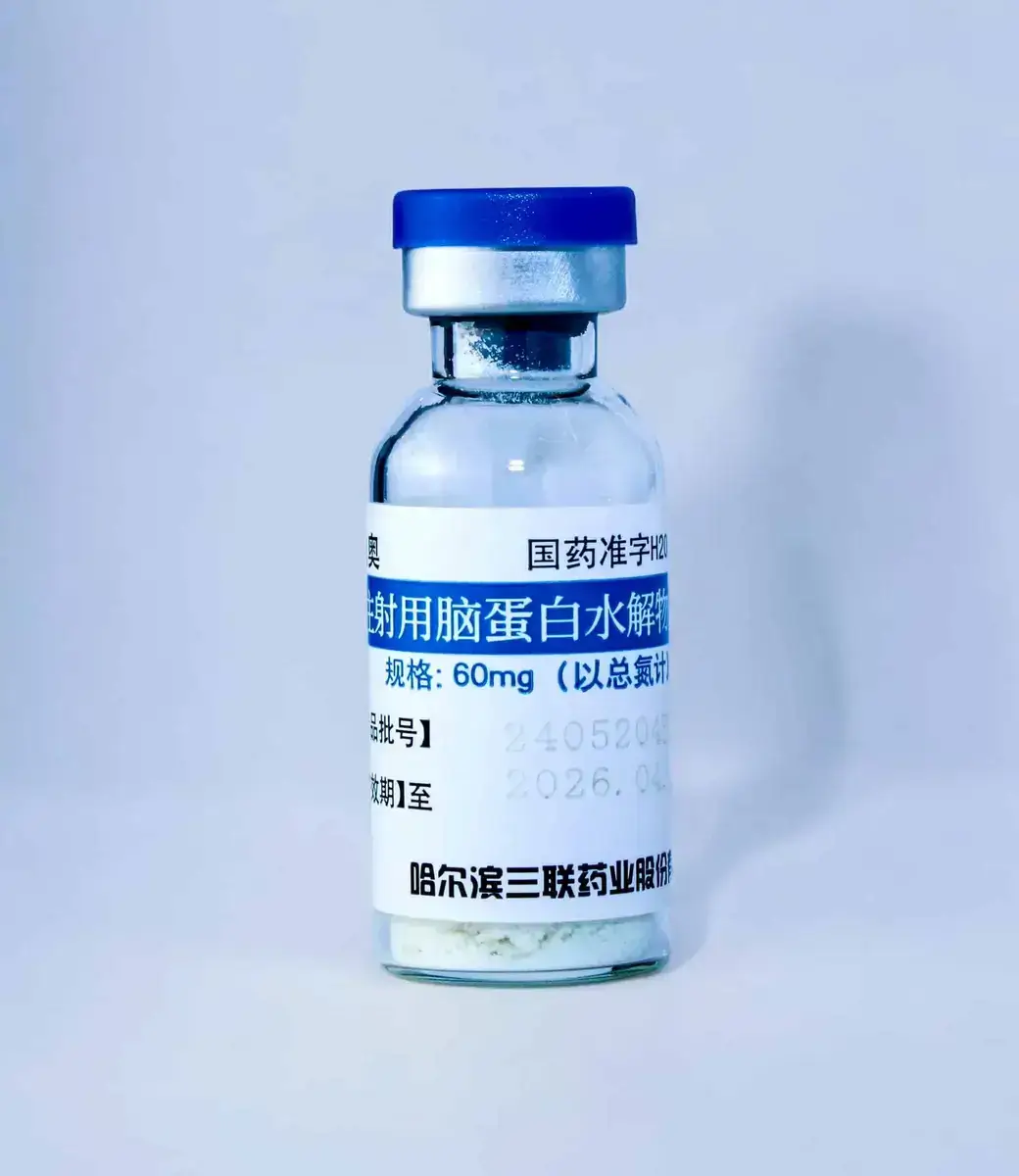
Cerebrolysin
$49.00
Cerebrolysin is a Research Reagent designed strictly for laboratory studies. It features a biological product prepared by enzymatic cleavage of proteins from porcine brain tissue.
The resulting hydrolysate contains free amino acids and small neurotrophic peptide fragments, enabling researchers to investigate mechanistic effects on neuronal signaling pathways in controlled laboratory settings. Not intended for human or animal use.
1000 in stock
Cerebrolysin Research Peptide | Neuropeptide Hydrolysate | CAS 12656-61-0
TECHNICAL SPECIFICATIONS
- Product Ref : Cerebrolysin (Research Reagent)
- Chemical Class : Peptide mixture / Neuropeptide hydrolysate
- CAS Number : 12656-61-0
- Molecular Weight : Low molecular weight profile (<10,000 Da) consistent with reported BBB-permeating peptide characteristics observed in preclinical literature.
- Composition : ~80% free amino acids + ~20% neuropeptides
- Active Fragments : BDNF, NGF, GDNF, CNTF fragments + P21 peptide (fragment content as identified in published HPLC analysis)
- Storage : Lyophilized: 2–8°C; Reconstituted: -20°C
Disclaimer : For Research Use Only (RUO). Not for human use.
Product Description
Overview :
This product comprises a multi-peptide neuroprotective preparation (as classified in preclinical literature) derived from porcine brain tissue.
Because it is a heterogeneous mixture rather than a single molecule, Cerebrolysin has no defined chemical structure or formula. It consists of approximately 80% free amino acids and 20% active neuropeptides (BDNF, NGF, GDNF, CNTF fragments).
Listed under CAS 12656-61-0.
Research Mechanism :
In 2026-era research, this peptide mixture is utilized to study mechanistic effects on neuronal signaling. The mechanisms include:
- Neurotrophic signaling : Peptides within Cerebrolysin have been investigated for potential BDNF/TrkB pathway interactions in preclinical models. Published studies explore associations with neuronal signaling. (Cite: PubMed PMID 29172008)
- Excitotoxicity & Oxidative Stress : Preclinical research has examined this compound’s relationship to glutamate signaling pathways and oxidative stress markers in laboratory models. Results are exploratory and not confirmed for human application.
- Neurogenesis : Animal model studies have observed associations with hippocampal neurogenesis markers following Cerebrolysin administration in controlled research settings. (Cite source)
- Pathway Modulation : Research includes Sonic Hedgehog (Shh) pathway modulation for neurogenesis and dendrite arborization research. (Cite: PubMed PMID 23696546)
Caption – Synergistic Mechanism of Action :
Blood-brain barrier (BBB) penetration has been observed in preclinical animal model studies. This has not been confirmed in human clinical contexts.
Chemical Diagram
Chemical Diagram of Cerebrolysin
Cerebrolysin lyophilized research reagent. Formulated strictly for laboratory investigations and in-vitro cellular models.

Cerebrolysin porcine peptide hydrolysate research reagent vial for in-vitro laboratory assays – CAS 12656-61-0
Regulatory Status : Research Use Only (RUO). Not for human consumption, diagnostic, or clinical use.
Comparative Research Context :
Table 1: 2026 Neuropeptide Research Landscape
| Feature | Cerebrolysin | P21 (P021) | Pinealon |
|---|---|---|---|
| Origin & Structure | Porcine brain tissue extract | Small-molecule mimetic derived from CNTF | Synthetic tripeptide (Glu-Asp-Arg) |
| Target Mechanism | Studied for interactions with BDNF, NGF, GDNF, CNTF pathways in preclinical models | Inhibits LIF signaling, increases BDNF | Modulates MAPK/ERK signaling |
| Research Focus | Synaptic plasticity studies | Dentate gyrus neurogenesis | Cellular lifespans, gene expression |
| Key PubMed Study (Year) | PMID: 29172008 (2021) | PMID: 20600002 (2010) | PMID: 21978084 (2020) |
WHY SOURCE FROM PROFOUND AMINOS
1. Transparency and Quality Standards :
We provide a Certificate of Analysis (COA) available for download for every product batch. Purity testing: HPLC, LC-MS, and endotoxin verification. Third-party independently verified by [lab name].
2. Traceable Origin :
Our product is derived from porcine brain tissue through standardized enzymatic hydrolysis, ensuring researchers receive a consistent heterogeneous mixture.
3. Established Scientific Validation :
Our research documentation references 40+ peer-reviewed publications indexed on PubMed, including studies from the Journal of Neurosurgery, Stroke, and Neuropharmacology. (List actual references on a linked citations page.)
REGULATORY & COMPLIANCE STATEMENT (RUO)
Regulatory Classification & Usage Disclaimer : This product is not approved by the FDA for therapeutic use in humans or animals. This statement is required by U.S. federal law for research-grade biological reagents.
Chemical Reference Standard : All product pages labeled ‘For Research Use Only, Not intended for use in humans or animals’
Legal Framework : It is legally sold under the Research Use Only (RUO) framework, distinct from FDA-regulated pharmaceutical or dietary supplement channels.
Handling Protocol : This reagent is a complex biological preparation. Researchers should follow standard laboratory PPE protocols during reconstitution, handling, and disposal in accordance with institutional biosafety guidelines.
Safety Data : Refer to CAS 12656-61-0 safety sheets before use.
Strict Prohibition
Promoting, distributing, or using this research reagent for any application involving human or animal administration is strictly prohibited and constitutes a violation of U.S. federal law. This product is not manufactured, labeled, or intended for any pharmaceutical, therapeutic, or clinical application.
Frequently Asked Questions
Q1: Is this product intended for human use?
A: No. It is legally sold exclusively as a research-grade compound labeled ‘not for human consumption.’
Q2: What is the FDA status?
A: Cerebrolysin is NOT FDA-approved in the USA for any medical indication. It is legally marketed as a research chemical under the research-use-only (RUO) framework.
Q3: What is the molecular structure?
A: Because it is a mixture, it cannot be represented by a single formula.
Q4: What specific fragments are present in this reagent?
A: The mixture contains numerous peptide fragments, specifically BDNF, NGF, GDNF, CNTF + free amino acids, as identified via HPLC profiling in published analytical studies.
Q5: What are the storage requirements?
A: Lyophilized 2–8°C; Reconstituted -20°C.
Q6: Does this compound cross the Blood-Brain Barrier?
A: BBB penetration has been observed in multiple preclinical animal model studies. This property has not been independently confirmed in human clinical trials and should not be extrapolated to human pharmacology.
Q7: What is the solubility profile?
A: Aqueous/laboratory buffers, organic solvents for in-vitro models (e.g., PBS, DMSO).
Q8: Do you provide purity verification?
A: Yes. We provide COA, HPLC, LC-MS, Endotoxin test. Available per batch upon request.
Q9: Has this compound been referenced in published research?
A: Yes, it has been examined in Alzheimer’s disease animal models and investigated for neuroprotective properties in traumatic brain injury (TBI) preclinical research. All studies are in controlled laboratory or animal settings – not human clinical trials.
Q10: Can this be used as a dietary supplement?
A: No. This product is classified as a research-use-only (RUO) reagent. It is not intended, labeled, or sold for dietary, nutraceutical, or personal wellness purposes. Marketing unapproved compounds for human consumption violates U.S. federal law.
| Weight | 0.02 lbs |
|---|---|
| Dimensions | 1.5 × 2.75 × 1 in |
| Strength |
60mg |
DISCLAIMER:
- Products sold on our website are meant for scientific research purposes only, designed for in vitro testing and lab experimentation exclusively. These products are not intended to be used as foods, drugs or cosmetics, any sort of bodily introduction of the products into humans or animals is strictly prohibited. They must also not be misbranded, misused, or mislabeled, or used for anything other than research and scientific investigation.
- All the products you see on the website are being sold in a lyophilized powder state (freeze-dried), in a sealed sterile vial; and should be reconstituted.
The product’s label clearly states the amount of product a vial contains; some products are offered in different variations. - The products we are selling come in a sealed vial but require additional lab equipment for proper testing.
- Though we make sure packaging, label, seals and writing does not differ from the product photos you see on our website, there is a chance for a minimal deviation.
Frequently bought together: BPC-157 Stable (Arg-Salt Capsules), LIPO-B, CJC-1295/Ipamorelin
Related products
Research Compounds
Research Compounds
Research Compounds
Research Compounds
Research Compounds