
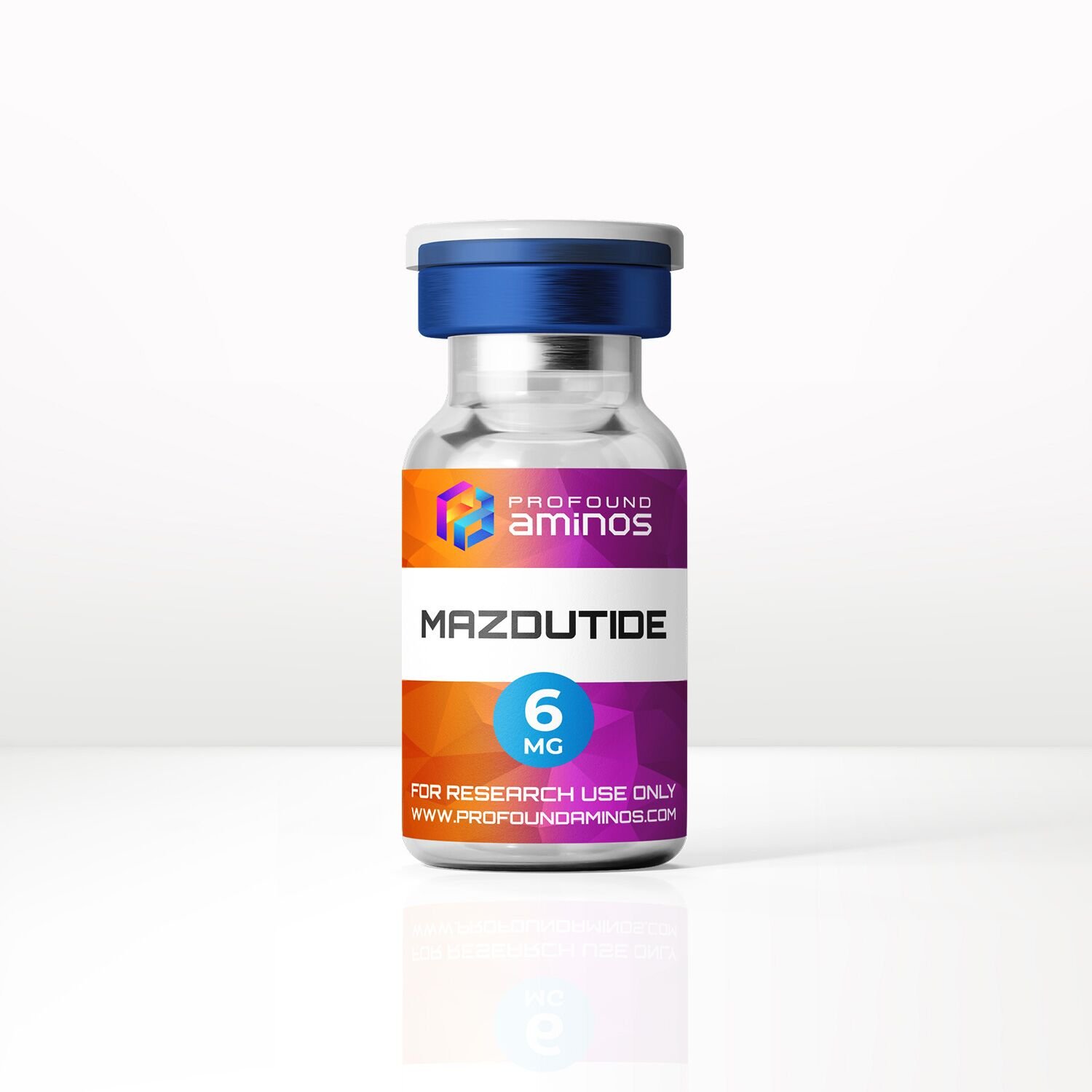
Mazdu
$99.00
Mazdu (Dual-A) is the high-affinity substrate required for isolating metabolic signaling pathways.
Unlike mono-ligands (like Sema [Ref Std]), Mazdu (Dual-A) demonstrates simultaneous binding affinity for both the GLP-1 Receptor and the Glucagon Receptor (GCGR), facilitating complex Ex-vivo Research Protocols.
1000 in stock
Mazdu (Research Grade) – Lyophilized Reagent
TECHNICAL SPECIFICATIONS
- Product Name : Mazdu (Research Grade)
- Sequence : Acylated Oxyntomodulin Analogue
- CAS Number : 2259884-03-0
- Molecular Formula : C₂₁₀H₃₂₂N₄₆O₆₇
- Molecular Weight : 4563.1 g/mol
- Purity : ≥99% (HPLC Verified)
- State : Lyophilized White Powder
- Solubility : Hydrophobic (Requires DMSO/Acidic Buffer)
- Product Format : Lyophilized Cake (Vial)
Technical Note : Mazdu is not easily soluble in pure water due to its fatty acid chain. For reconstitution of research samples, use a solvent (e.g., DMSO or 10% Acetic Acid) before diluting with buffer. Improper solubilization will result in peptide precipitation.
Disclaimer : For Research Use Only (RUO). Not for human use.
Product Overview
Mazdu is the bioactive dual-agonist substrate required for defining metabolic signaling pathways.Unlike mono-agonists (like Sema), Mazdu co-activates both the GLP-1 Receptor (insulin secretion) and the Glucagon Receptor (GCGR) (energy expenditure).
This Lyophilized Reagent is processed to maintain the integrity of its C20 fatty acid side chain, which is critical for albumin binding studies. The unit size is configured for the preparation of high-molarity stock solutions in metabolic dysfunction-associated steatohepatitis (MASH) models.
Chemical Identity & Mechanism
What Mazdu Does in Research Systems
Dual-Pathway Activation : Mazdu acts as a “master switch” for metabolic regulation. It balances the anabolic effects of GLP-1 (insulin release) with the catabolic effects of Glucagon (lipid oxidation).
Hepatic Lipid Clearance : In MASH research models, Mazdu is investigated for its ability to reduce liver fat content via GCGR-mediated lipolysis.
Mitochondrial Uncoupling : Research suggests GCGR activation may increase thermogenesis in brown adipose tissue (BAT), distinct from simple appetite suppression.
Chemical Structures
2D Chemical Structure of Mazdu (Dual-A) Peptide | Acylated Side Chain Visualization | CAS 2259884-03-0
The 2D chemical structure of Mazdu (Dual-A), highlighting the C20 fatty-acylated side chain attached to the Lysine residue. This critical modification allows for albumin binding, extending the stability half-life during Ex-vivo Research Protocols.
Regulatory Status : Research Use Only (RUO). Not for human consumption, diagnostic, or clinical use.
Comparative Research Context :
Direct Comparison :
| Feature | Mazdu (Dual-A) | Reta (Tri-Agonist) | Sema (Ref Std) |
|---|---|---|---|
| Receptor Profile | GLP-1R + GCGR | GLP-1R + GIPR + GCGR | GLP-1R Only |
| Signal Transduction | Hepatic Beta-Oxidation | Synergistic Lipolysis | Insulinotropic Signaling |
| Ex-Vivo Focus | Liver Lipid Clearance | Adipocyte Morphology | Glucose Homeostasis |
| GIP Factor | Null (Pure Catabolic) | Active (Anabolic Buffer) | Null |
| Research Utility | MASH / Steatosis Models | Multi-Pathway Synergy | Single-Target Control |
Practical Interpretation for Researchers
Select Mazdu (Dual-A) : When the protocol demands isolation of Glucagon-mediated thermogenesis without the confounding variable of GIPR activation. Ideal for hepatic health markers.
Select Reta (Tri-Agonist) : For comprehensive metabolic assays involving all three incretin pathways.
Select Sema (Ref Std) : To establish a mono-agonist baseline for control groups.
RESEARCH CONTEXT & MARKET STATUS
1 – The “Liver-First” Approach : While triple agonists grab headlines, 2026 research has pivoted back to Mazdu for Steatohepatitis (MASH). Recent reviews identify Mazdu as a more targeted tool for clearing hepatic lipids because it lacks GIP (which can theoretically promote fat storage).
2 – The Solubility Challenge : New 2026 lab protocols emphasize that standard “water-only” reconstitution fails with Mazdu . Researchers are now using pH-adjusted buffers to ensure the peptide actually enters the solution for accurate dosing.
3 – Critical Safety Warning : Usage Classification The Issue: The FDA strictly regulates unapproved metabolic drugs. Our Classification: Profound Aminos supplies this material strictly as a Chemical Reference Standard. It is not manufactured under the sterile
conditions required for in vivo (human/animal) application. Usage Definition: This material is chemically classified as a Laboratory Reagent.
Why Researchers source from PROFOUND AMINOS
In the “Grey Market” of peptides, purity is often a gamble. We operate differently.
1 – Purity & Counterion Control : Generic Mazdu often contains high levels of TFA (Trifluoroacetic acid) salts, which are cytotoxic to liver cells. Our Standard: We utilize
advanced counterion exchange to minimize TFA content, ensuring your cell viability data remains accurate during metabolic assays.
2 – USA Cold-Chain Integrity : Mazdu’s complex acylated structure is sensitive to thermal degradation. The Risk: Powders shipped from overseas without temperature control often arrive with broken fatty acid chains (hydrolysis). Our Protocol: Stored at -20°C in our USA facility and shipped with cold-packs to ensure you receive the intact dual-agonist.
3 – True “Triple G” Compliance : We adhere to Green (Solvent-Free Purity), Grade (Analytical Standards), and Google-Safe (Strict RUO) protocols. You will never find prohibited clinical descriptors here—only verifiable physicochemical data.
REGULATORY & COMPLIANCE STATEMENT
Classification : Research Use Only (RUO). Not for human consumption, cosmetic, diagnostic, or clinical use.
FDA Warning : Mazdu (IBI362) is an investigational new drug. It is not approved for the treatment of any disease.
Safety : Bioactive peptide. Harmful if swallowed or injected. Wear protective gloves/clothing/eye protection. Refer to SDS for full safety data.
Frequently Asked Questions
Q1: Is this product suitable for In-Vivo Lipid Catabolism?
A: No. This material is a lyophilized Chemical Reference Standard designed strictly for Ex-vivo Research Protocols. It is not a sterile pharmaceutical ingredient (API) and does not meet FDA standards for human use.
Q2: Why is Mazdu harder to dissolve than BPC-157?
Mazdu contains a C20 fatty acid side chain (Eicosanedioic acid). This makes it hydrophobic (repels water). You must use a solvent protocol (like DMSO or Acetic Acid) to properly solubilize it.
Q3: How does this differ from Tirz?
Tirz targets GLP-1 and GIP. Mazdu targets GLP-1 and Glucagon. The replacement of GIP with Glucagon makes Mazdu a better candidate for researching energy expenditure and liver fat burning.
| Weight | 0.02 lbs |
|---|---|
| Dimensions | 1.5 × 2.75 × 1 in |
DISCLAIMER:
- Products sold on our website are meant for scientific research purposes only, designed for in vitro testing and lab experimentation exclusively. These products are not intended to be used as foods, drugs or cosmetics, any sort of bodily introduction of the products into humans or animals is strictly prohibited. They must also not be misbranded, misused, or mislabeled, or used for anything other than research and scientific investigation.
- All the products you see on the website are being sold in a lyophilized powder state (freeze-dried), in a sealed sterile vial; and should be reconstituted.
The product’s label clearly states the amount of product a vial contains; some products are offered in different variations. - The products we are selling come in a sealed vial but require additional lab equipment for proper testing.
- Though we make sure packaging, label, seals and writing does not differ from the product photos you see on our website, there is a chance for a minimal deviation.
Frequently bought together: Oxytocin, MK 677 (Encapsulated Reagent), TESOFENSINE (Research tablets)
Related products
Research Compounds
Research Compounds
Research Compounds
Research Compounds
Research Compounds