
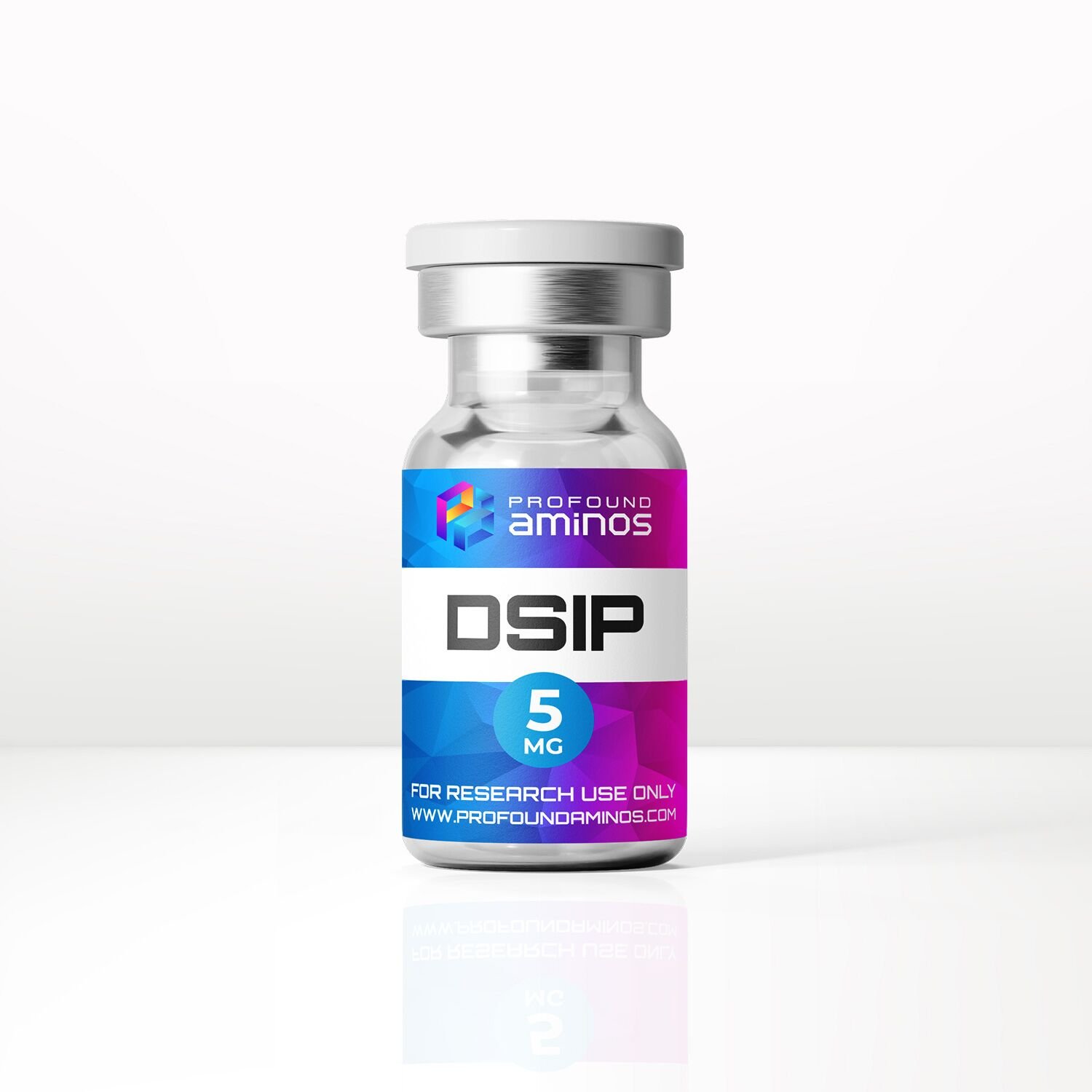
DSIP
$39.00
DSIP is a high-purity research peptide commonly used to explore slow-wave sleep regulation, neurotransmitter balance, circadian rhythm patterns, and neuroendocrine function.
Its biochemical stability and wide physiological influence make it a dependable model for sleep and stress-response studies in controlled laboratory environments.
1000 in stock
Delta-Sleep-Inducing Peptide (DSIP): Sleep Biology & Neuroendocrine Research Peptide
Product Specifications
- Formula: Nonapeptide (Trp-Ala-Gly-Gly-Asp-Ala-Ser-Gly-Glu)
- Molecular Weight: ~849 Da
- Purity: ≥99% (HPLC verified)
- Solubility: Fully soluble in sterile water or PBS
- Storage: −20°C, protected from light and moisture
- Use: For Research Use Only. Not for human or veterinary use
Overview and Research Significance
Delta sleep inducing peptide (DSIP) is a naturally occurring nonapeptide first identified in the bloodstream of mammals during deep sleep. Since its discovery, it has become one of the most researched peptides related to sleep architecture and brain-body communication.
Even after decades of research, DSIP remains scientifically intriguing. Its precise genetic origin and receptor interactions are not fully understood, and multiple biochemical pathways appear to be involved. These unanswered questions keep this peptide relevant in ongoing neuroscience, sleep physiology, and neuroendocrine signaling research.
Physicochemical Traits and Experimental Handling
DSIP is amphiphilic, which means it can interact easily with different biological environments. Research suggests it can cross the blood–brain barrier and maintain structural stability under experimental conditions. Because of this, Delta sleep inducing peptide is frequently used in lab models investigating how the brain regulates restorative sleep.
Another unique feature of DSIP is its resistance to digestive enzymes, which has allowed scientists to explore different administration routes and track systemic peptide behavior.
Sleep Architecture and Cross-Species Findings
In several controlled animal and human studies, DSIP has been linked to reduced time needed to fall asleep, fewer nighttime disturbances, and a greater presence of delta (slow-wave) sleep.
Unlike sedative compounds, it does not suppress REM cycles, giving scientists a chance to observe natural sleep patterns. Species comparisons also provide valuable insight—some studies note that cats show stronger REM-related responses than delta effects, making this pepide a useful cross-species research tool.
Neurochemical and Endocrine Mechanisms plus Research Uses
Researchers also study DSIP for its effects on neurotransmitters and hormones. Experimental models show changes in GABA, serotonin, and norepinephrine signaling after DSIP exposure. Endocrine responses have also been recorded, including altered levels of ACTH, growth hormone, luteinizing hormone, and somatostatin. Because of this, Delta sleep inducing peptide supports research into stress adaptation, energy regulation, and circadian timing.
Laboratories use DSIP in projects involving: – Sleep and circadian rhythm analysis – Stress and anxiety-related behavioral pathways – Substance withdrawal response models – Thermoregulation and pain sensitivity experiments – Oxidative and inflammatory signal pathways.
Overall, DSIP offers consistent purity, broad biological impact, and strong research value. Its role in slow-wave sleep and neurohormonal signaling makes it a useful tool for laboratories studying how the brain controls restorative sleep and physiological balance.
For Research Use Only. Not for human or veterinary use. Information is based on published scientific literature and provided for academic reference.
Features / Highlights
1. Commonly used in delta-sleep and circadian rhythm research
2. Useful in neurotransmitter and hormone regulation studies
3. ≥99% purity (HPLC confirmed)
4. Able to cross the blood–brain barrier in experimental models
5. Reported stability across multiple laboratory conditions
6. Strictly for Research Use Only (RUO)
Selected Research References
- De Wied, D. — “Regulatory Role of Delta sleep inducing peptide in Brain Neuroendocrine Function.” Peptides
- Graf, M. et al. — “Slow-Wave Sleep Modulation Using DSIP.” Journal of Sleep Research
- Szentirmai, E. — “DSIP and Circadian Timing Mechanisms.” Neurobiology of Sleep and Rhythms
- Vogel, G. — “Species-Dependent REM and Delta Response to DSIP.” Sleep Medicine Studies
Storage Instructions
– Store at −20°C in a tightly sealed container
– Keep away from light and moisture
– Avoid frequent freeze–thaw cycles
The chemical structure of Delta-sleep-inducing-peptide.
sequence formula
FAQs
What is DSIP used for in research?
For studies involving slow-wave sleep regulation, neurotransmitter balance, stress signaling, and circadian rhythm biology.
Can DSIP be used in humans or animals?
No. It is strictly for Research Use Only.
Is Delta sleep inducing peptide a sedative?
No. Studies show it may influence sleep naturally without suppressing REM cycles.
Why is high purity important?
≥99% purity supports accurate and repeatable laboratory outcomes.
Why is DSIP interesting to neuroscientists?
Because it affects sleep, hormones, neurotransmitters, and stress responses in multiple species.
| Weight | 0.02 lbs |
|---|---|
| Dimensions | 1.5 × 2.75 × 1 in |
| Strength |
5mg |
DISCLAIMER:
- Products sold on our website are meant for scientific research purposes only, designed for in vitro testing and lab experimentation exclusively. These products are not intended to be used as foods, drugs or cosmetics, any sort of bodily introduction of the products into humans or animals is strictly prohibited. They must also not be misbranded, misused, or mislabeled, or used for anything other than research and scientific investigation.
- All the products you see on the website are being sold in a lyophilized powder state (freeze-dried), in a sealed sterile vial; and should be reconstituted.
The product’s label clearly states the amount of product a vial contains; some products are offered in different variations. - The products we are selling come in a sealed vial but require additional lab equipment for proper testing.
- Though we make sure packaging, label, seals and writing does not differ from the product photos you see on our website, there is a chance for a minimal deviation.
Frequently bought together: Kisspeptin, Melanotan 1, 10ml Vial Storage Case
Related products
Research Compounds
Research Compounds