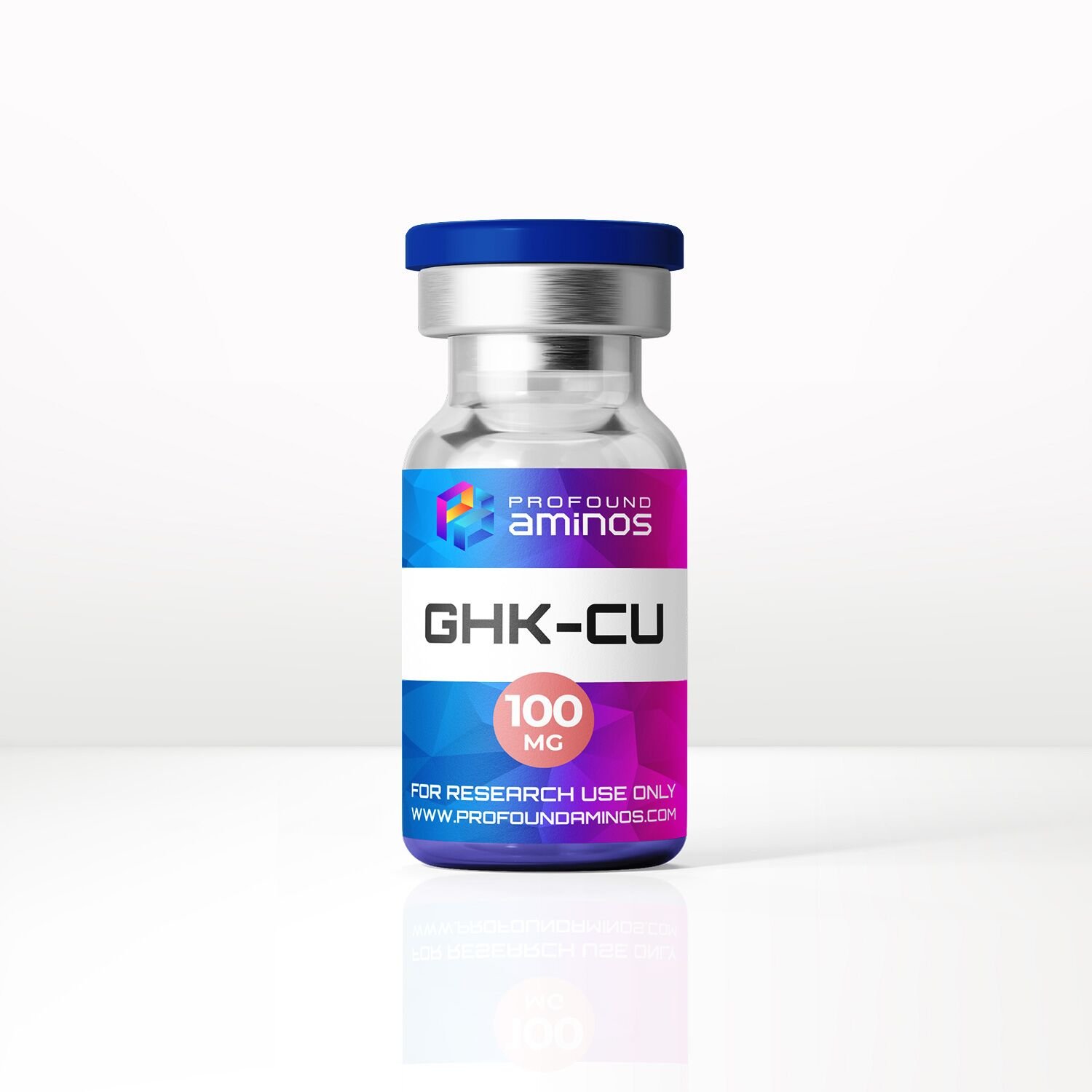
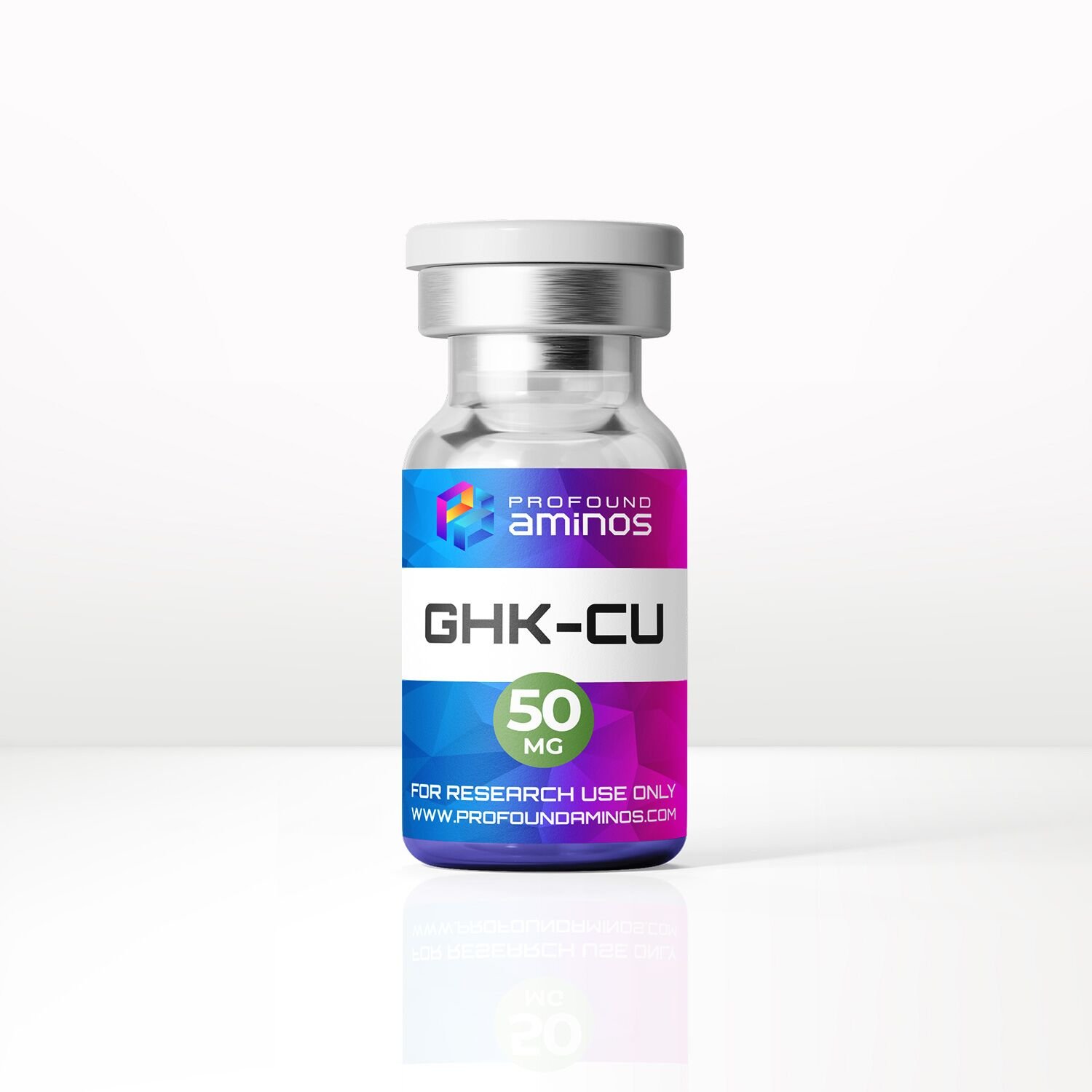
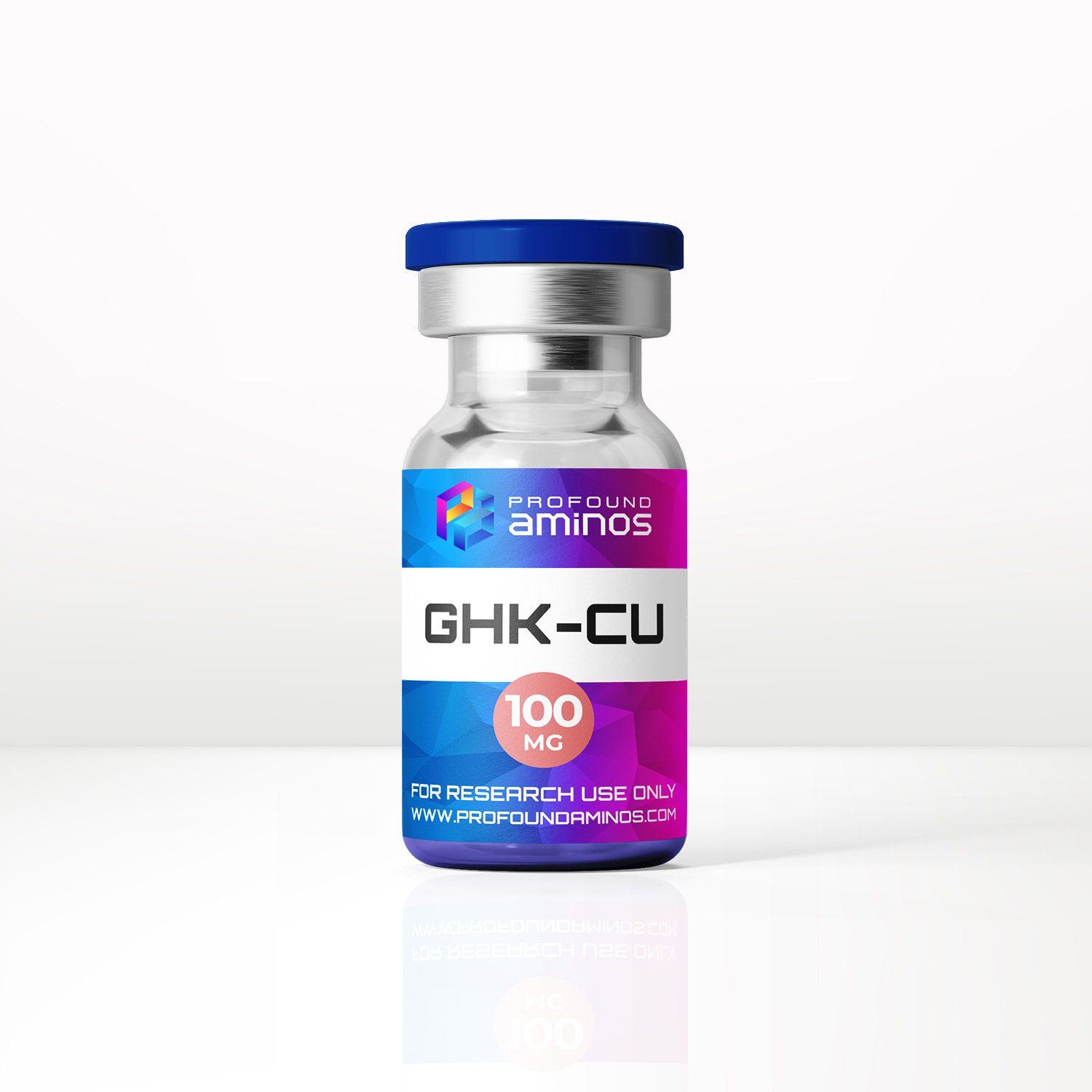
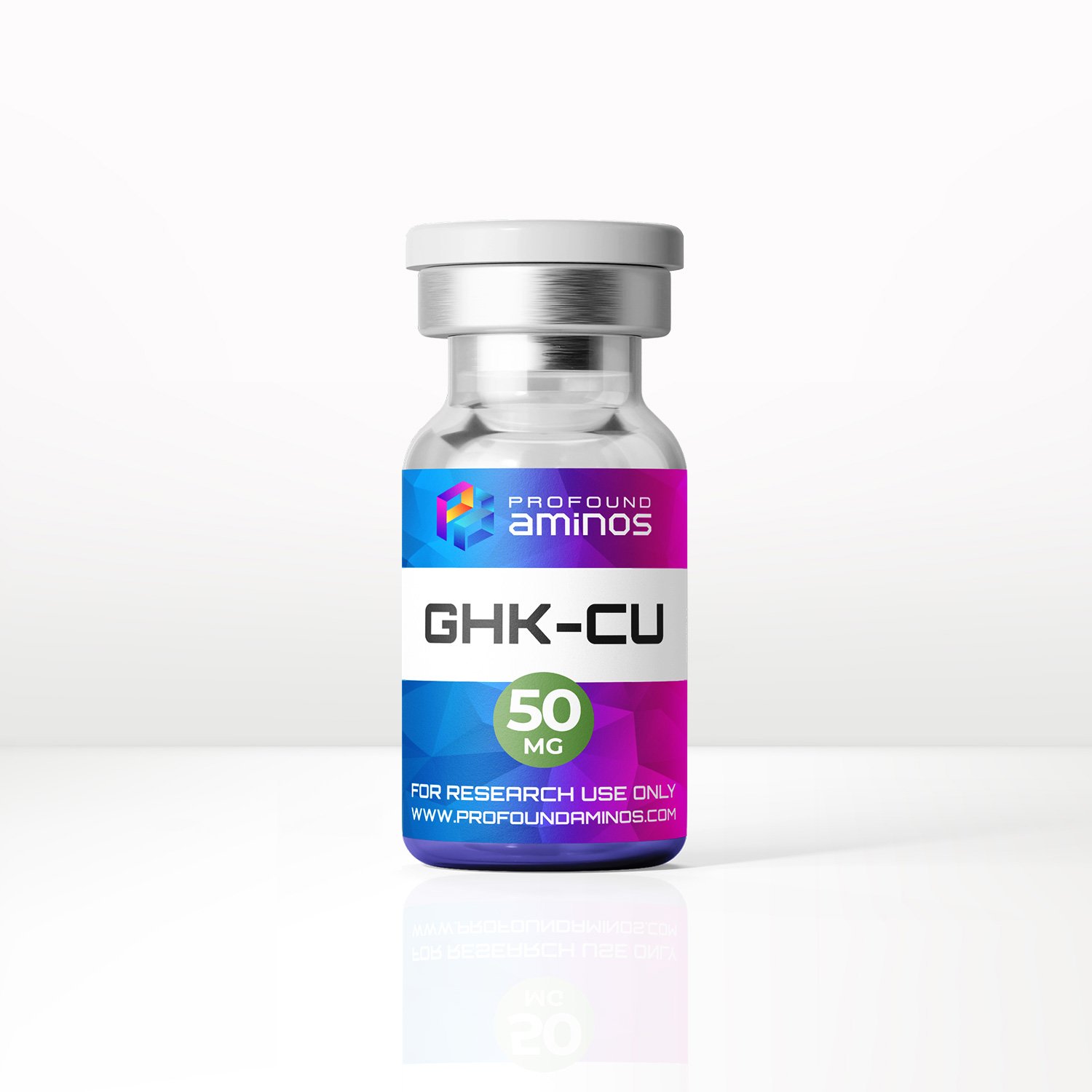
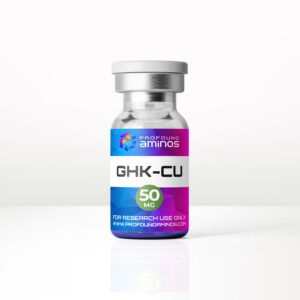
GHK-CU
Price range: $49.00 through $69.00
GHK-Cu (Copper Tripeptide-1) is a naturally occurring copper-complexed tripeptide research reagent supplied as a lyophilized powder for controlled laboratory investigation.
Formulated as Glycyl-L-Histidyl-L-Lysine complexed with Cu²⁺, this reagent is extensively characterized in peer-reviewed literature for its role in extracellular matrix signaling, copper coordination chemistry, and multi-pathway cellular biology research. Supplied at 50 analytical mass units with ≥99% purity by RP-HPLC and identity confirmed by LC-MS.
Not for consumption, parenteral administration, or any application outside a controlled laboratory setting.
5. Biomaterials & Delivery Systems Research : 2025 Nature Communications: dimeric copper-peptide hydrogels for diabetic wound models document inflammatory/proliferative phase transitions. 2019 ACS Omega: pH-responsive GHK-Cu hydrogels with in-vivo safety evaluation. Research endpoints: hydrogel mechanical characterization, controlled release profiling, in-vitro biocompatibility assessment.
MOLECULAR STRUCTURE
Chemical structure of GHK-Cu
2D chemical structure diagram of a synthetic peptide molecule displaying its atomic bonds and functional groups.
Copper Coordination Chemistry Details
| Parameter | Detail |
|---|---|
| IUPAC Name | Copper(II) complex of glycyl-L-histidyl-L-lysine |
| CAS Registry | 89030-95-5 (complex) | 49557-75-7 (apo-peptide GHK) |
| PubChem CID | 378611 |
| Molecular Formula | C₁₄H₂₃CuN₆O₄ |
| Molecular Weight | 340.4 Da (peptide backbone) + Cu²⁺ coordination |
| Cu²⁺ Coordination Sites | Imidazole N (His) + alpha-amino N (Gly) + deprotonated amide N |
| Log Stability Constant | ~16.44 (PMC3359723) |
| Conditional Kd at pH 7.4 | Picomolar range (PMC7503498) |
| Complex Stability (pH) | Most stable pH 4–6; dissociation at extremes |
| Redox Chemistry | Cu(II)GHK reduced by glutathione via thiolate intermediates (PMC8653159) |
Comparative Research Context :
Table 1: Copper Peptide Landscape
| Feature | GHK-Cu (Profound) | Matrixyl (Pal-KTTKS) | LL-37 | GHK (apo-peptide) |
|---|---|---|---|---|
| Chemical Class | Cu²⁺-complexed tripeptide | α-amino fatty acid pentapeptide | Host-defense cathelicidin | Apo-tripeptide (no copper) |
| Primary Research Focus | ECM + copper coordination + NF-κB/SIRT1 | Collagen synthesis only | Antimicrobial + immune | ECM (without copper activity) |
| Copper Activity | Cu²⁺ coordination verified | None | None | Absent |
| Cytokine Regulation Analysis | NF-κB, MAPK, SIRT1/STAT3 | Limited | Limited | Limited |
| US Search Volume (Jan 2026) | 90,500/month — +1,016% YoY | Lower | Lower | Lower |
| COA Requirement | Cu stoichiometry + HPLC + MS | HPLC only | HPLC + MS | HPLC + MS |
| Regulatory Class (RUO) | RUO — Not for administration | RUO | RUO | RUO |
WHY SOURCE FROM PROFOUND AMINOS
1-Copper Stoichiometry Verification – Not Just Purity
Standard HPLC purity confirms peptide content but cannot confirm whether copper coordination is complete, partial, or absent. Our GHK-Cu batches include verification of Cu:peptide stoichiometric ratio ensuring researchers receive the complexed form (Cu(II)GHK) required for copper-mediated pathway research, not the apo-peptide (GHK) alone. This distinction is analytically and scientifically critical.
2-pH-Stable Formulation Intelligence
Published physicochemical characterization (Tandfonline, formulation stability study) documents GHK-Cu complex stability as pH-dependent, with optimal stability at pH 4–6 and complex dissociation outside that range. Our technical data sheet includes storage and reconstitution buffer guidance aligned to published stability data , protecting assay integrity from formulation-induced artifact.
3-Cold-Chain Integrity -USA Domestic Dispatch
Copper-peptide complexes are sensitive to thermal and oxidative degradation. KLOW ships exclusively within the USA via monitored cold-chain logistics from a climate-controlled facility , eliminating the uncontrolled temperature excursions documented in international shipments of metal-peptide research reagents.
REGULATORY & COMPLIANCE STATEMENT (RUO)
FOR RESEARCH USE ONLY. NOT FOR HUMAN OR ANIMAL APPLICATION.
- Regulatory Status : Research Use Only (RUO) — U.S. Federal Framework
- FDA Status : No FDA-approved GHK-Cu drug product exists. Cosmetic ingredient status only for finished products.
- Not a Drug : Not evaluated by FDA for safety or efficacy in any clinical application
- Not a Supplement : Not a dietary supplement, nutraceutical, or consumer product
- Cosmetic Ingredient Note : INCI: Copper Tripeptide-1. CIR safety assessment concluded safe in cosmetics at present use concentrations.
- PPE Required : Gloves, lab coat, protective eyewear. Copper is biologically active , handle as bioactive chemical reagent.
- CAS Safety Sheets : CAS 89030-95-5 , refer to SDS before use
- Google 2026 Compliance : No therapeutic claims. No dosing language. No human-use implication. E-E-A-T compliant.
STRICT PROHIBITION : Promoting, distributing, or using this research reagent for any application involving administration to living organisms is strictly prohibited under U.S. federal law. FDA warning letters (2024–2025) confirm that ‘research use only’ labelling does not shield products from drug-misbranding enforcement where marketing implies human use.
These statements have not been evaluated by the Food and Drug Administration. This product is not intended to diagnose, treat, cure, or prevent any disease.
Frequently Asked Questions
Q1: Is GHK-Cu intended for consumption or administration?
A: No. GHK-Cu is strictly classified as a Research Use Only (RUO) laboratory reagent. It is not approved, labeled, or intended for consumption, parenteral administration, therapeutic use, or any diagnostic application. Purchase confirms agreement to institutional laboratory research use only.
Q2: What is the difference between GHK (apo-peptide) and GHK-Cu?
GHK is the apo-tripeptide (glycyl-L-histidyl-L-lysine) without copper coordination. GHK-Cu is the copper-complexed form where Cu²⁺ is coordinated by the imidazole nitrogen of histidine, the alpha-amino group of glycine, and the deprotonated amide nitrogen. Published copper coordination chemistry research (PMC8653159) demonstrates distinct redox reactivity for the complexed form — including thiolate intermediates in glutathione-mediated Cu(II) reduction. Researchers requiring copper-mediated pathway investigation must use the complexed GHK-Cu form, not the apo-peptide.
Q3: What analytical data is provided with each batch?
Each batch includes: (1) RP-HPLC purity ≥99%, (2) LC-MS molecular weight confirmation, (3) Cu:peptide stoichiometric ratio verification, (4) endotoxin screening <0.25 EU (LAL assay), (5) lot number for full traceability, (6) storage and stability conditions. Certificate of Analysis available per batch from our COA portal.
Q4: What is the recommended reconstitution buffer for laboratory use?
Published physicochemical characterization documents GHK-Cu complex stability as pH-dependent, with optimal stability at pH 4–6. For most in-vitro assays, an aqueous buffer at pH 5–6 is recommended. Researchers should consider pH compatibility with their cell culture medium and assay conditions. Cu(II)GHK undergoes reduction chemistry with thiols (e.g., glutathione) in biological matrices ,design experiments with appropriate redox controls.
Q5: What is the FDA regulatory status of GHK-Cu?
In the US, GHK-Cu has three distinct regulatory contexts: (1) As a cosmetic ingredient (INCI: copper tripeptide-1), it is treated as a cosmetic under the FD&C Act with no pre-market FDA approval required, but marketing claims must remain appearance-related. (2) As a research chemical, it is not directly regulated by FDA for lab use , compliance follows laboratory safety frameworks (OSHA). (3) As a compounded substance, it falls under Section 503A/503B oversight. No FDA-approved GHK-Cu drug product exists. This product is supplied exclusively as an RUO research reagent.
Q6: What published research supports GHK-Cu investigation?
Key published research includes: PMC6073405 (Pickart & Margolina 2018, open access — comprehensive gene-modulation and regenerative actions review, 200+ citations); PMC3359723 (oxidative stress and antioxidant framing with coordination chemistry); PMC8653159 (Cu(II)GHK glutathione reduction mechanism, Inorganic Chemistry 2021); Nature Communications 2025 (dimeric copper-peptide hydrogels for diabetic wound models); ACS Omega 2019 (pH-sensitive GHK-Cu hydrogels); FEBS Letters 1988 (Maquart et al. — collagen synthesis stimulation at sub-nanomolar concentrations).
Q7: Is there US clinical trial data on GHK-Cu?
As of March 2026, a topical wound-healing gel study has been registered on ClinicalTrials.gov (initiated 2026) ,representing an important forward indicator. Prior human evidence is primarily limited to small-sample, short-duration cosmetic clinical studies (8–12 weeks) summarized in review articles (PMC6073405). These studies report improvements in wrinkle measures, skin density, and photodamage signs but lack the scale of large independently replicated dermatology RCTs. This product is not a clinical product and is supplied for laboratory research only.
Q8: Can GHK-Cu be used outside a controlled laboratory research setting?
A: Absolutely not. This reagent is classified strictly and preclinical laboratory investigation only. Any non-laboratory use violates our Terms of Service. Refer to our Terms & Conditions for full compliance requirements.
Q9: How does GHK-Cu search demand compare to other research peptides in 2026?
A US peptide keyword trend report (Google Ads data via DataForSEO, January 2026) reports GHK-Cu at 90,500 monthly US searches with +1,016% year-over-year growth — ranking among the fastest-growing peptide search terms in the USA. This places GHK-Cu alongside BPC-157 and semaglutide analogues as a high-demand research reagent. Keyword difficulty for GHK-Cu and healing/recovery peptides averages KD 4–8 versus KD 20–35 for weight-loss peptide terms — indicating significant organic ranking opportunity.
Q10 : Is GHK-Cu the same as Matrixyl or other cosmetic research peptides?
No. Matrixyl (Pal-KTTKS) is a fatty acid-conjugated pentapeptide with a different amino acid sequence, a distinct signaling mechanism, and no copper coordination activity. GHK-Cu is uniquely characterized by its Cu²⁺ chelation chemistry, SIRT1/STAT3 modulation, and multi-pathway applications in studying extracellular matrix (ECM) reconstruction and NF-κB / cytokine modulation. They are chemically and mechanistically distinct compounds suitable for investigating different aspects of cellular biology in laboratory environments.
KEY REFERENCES
| # | Citation | Type | Relevance |
|---|---|---|---|
| 1 | Pickart L, Margolina A. Int J Mol Sci 2018 (PMC6073405) | Open Access Review | GHK-Cu gene modulation, regenerative actions — primary authority paper (200+ citations) |
| 2 | Maquart FX et al. FEBS Letters 1988;238:343 | Primary Study | Collagen synthesis stimulation at sub-nanomolar concentrations — landmark study |
| 3 | Pickart L et al. Oxid Med Cell Longev 2012 (PMC3359723) | Review | Copper coordination, antioxidant, anti-inflammatory mechanisms |
| 4 | Bertini I et al. Inorg Chem 2021 (PMC8653159) | Primary Research | Cu(II)-GHK thiolate mechanism — redox chemistry insights |
| 5 | PMC7503498 — Potentiometric speciation study | Primary Chemistry | Conditional stability constants at physiological pH |
| 6 | Maquart FX et al. J Invest Dermatol 2000;115 | Primary Study | In-vivo ECM regulation (decorin/biglycan) in wound models |
| 7 | Wound Repair Regen 2015 (MMP/TIMP review) | Review | Protease balance — MMP/TIMP modulation data |
| 8 | Nat Commun 2025 (dimeric copper-peptide hydrogel) | Primary Research | Diabetic wound biomaterials — advanced delivery systems |
| 9 | ACS Omega 2019 (pH-sensitive hydrogel) | Primary Research | pH-responsive GHK-Cu delivery — in-vivo safety |
| 10 | DataForSEO / PeptideEffect.com 2026 Report | Market Intelligence | GHK-Cu search volume ~90,500/month (+1,016% YoY) |
| 11 | CIR Safety Assessment — Copper Tripeptide-1 | Regulatory | INCI safety for cosmetic use |
| 12 | FDA Warning Letters SwissChem 2024 / US Chem Labs 2024 | Regulatory Enforcement | RUO labeling vs intended-use compliance framework |
GHK-Cu Copper Tripeptide-1 – Research Reagent
TECHNICAL SPECIFICATIONS
- Product Reference : GHK-Cu Copper Tripeptide-1 (Research Reagent)
- Chemical Class : Copper-Complexed Tripeptide Reagent
- INCI Name : Copper Tripeptide-1
- Physical Format : Lyophilized Powder , Hermetically Sealed Sterile Container
- Net Reagent Content : 50 analytical mass units per sealed container
- CAS Registry : 89030-95-5
- PubChem CID : 378611
- Molecular Formula : C₁₄H₂₃CuN₆O₄
- Molecular Weight : 340.4 Da
- Analytical Purity : ≥99% by RP-HPLC
- Identity Confirmation : LC-MS — Molecular weight and sequence verified
- Endotoxin Screening ; <0.25 EU (LAL assay)
- Copper Stoichiometry : Cu :peptide ratio verified by ICP or colorimetric method
- Reconstitution Buffer : Aqueous laboratory buffer (pH 4–6 recommended for complex stability)
- Storage -Lyophilized : 2–8°C, desiccated, light-protected
- Storage -In Solution : −20°C, single-use aliquots advised
- Regulatory Class : Research Use Only (RUO) — Not for administration to living organisms
Disclaimer : For Research Use Only (RUO). Not for human use.
Product Description
Overview :
This product comprises a Copper Tripeptide-1 Research Reagent supplied as a lyophilized powder and preclinical research applications. GHK-Cu is a naturally occurring small peptide first isolated from human plasma albumin in the early 1970s by Loren Pickart, with documented endogenous plasma concentrations that decline significantly with advancing age.
In primary literature, GHK-Cu is characterized by unusually strong copper-binding chemistry for such a small peptide. A widely cited mechanistic review (PMC3359723) reports a high stability constant for the Cu²⁺ complex and documents structural proposals for Cu(II) coordination. A potentiometric speciation study (PMC7503498) provides conditional stability constants at physiologically relevant conditions, translating to picomolar-range conditional dissociation constants at pH 7.4.
Unlike single-mechanism research tools, GHK-Cu operates across multiple documented signaling pathways simultaneously , making it uniquely valuable for researchers investigating the intersection of copper coordination chemistry, ECM remodeling, and inflammatory pathway modulation in a single well-characterized system.
Research Mechanism -2026 Laboratory Applications
In 2026-era regenerative biology and materials science research, GHK-Cu is utilized to investigate:
1 .ECM Remodeling & Collagen Synthesis : Early in-vitro work (Maquart et al., FEBS Letters 1988) reported stimulation of collagen synthesis in fibroblast cultures at pico-to-nanomolar concentrations. In-vivo wound models document increased collagen and glycosaminoglycan deposition with differential regulation of small proteoglycans (decorin upregulated; biglycan downregulated). Research endpoints: collagen I/III gene expression panels, fibroblast proliferation assays, glycosaminoglycan quantification.
2. MMP/TIMP Protease Balance : A major review (Wound Repair and Regeneration 2015) synthesizes evidence that GHK-Cu modulates metalloproteinases and inhibitors, consistent with a tissue-remodeling phenotype. Research endpoints: MMP-2/MMP-9 zymography, TIMP expression panels, scratch-wound closure assay metrics.
3. Anti-Inflammatory Pathway Modulation : 2023-2025 preclinical data extends mechanisms to SIRT1 activation and p-STAT3 downregulation in colitis models, improvement of mucosal barrier proteins (ZO-1, occludin), and reduction of Th17-driven inflammatory signaling. Research endpoints: NF-κB luciferase reporter assays, MAPK phosphorylation panels, tight-junction protein expression via Western blot.
4. Copper Coordination Chemistry : Detailed spectroscopic/electrochemical work (Inorganic Chemistry 2021, PMC8653159) shows thiolate intermediates in the reduction of Cu(II)GHK by glutathione, framing GHK as a biologically relevant copper(II) reduction scaffold. Research endpoints: potentiometric speciation studies, UV-Vis spectroscopy, electrochemical redox potential measurement.
5. Biomaterials & Delivery Systems Research : 2025 Nature Communications: dimeric copper-peptide hydrogels for diabetic wound models document inflammatory/proliferative phase transitions. 2019 ACS Omega: pH-responsive GHK-Cu hydrogels with in-vivo safety evaluation. Research endpoints: hydrogel mechanical characterization, controlled release profiling, in-vitro biocompatibility assessment.
MOLECULAR STRUCTURE
Chemical structure of GHK-Cu
2D chemical structure diagram of a synthetic peptide molecule displaying its atomic bonds and functional groups.
Copper Coordination Chemistry Details
| Parameter | Detail |
|---|---|
| IUPAC Name | Copper(II) complex of glycyl-L-histidyl-L-lysine |
| CAS Registry | 89030-95-5 (complex) | 49557-75-7 (apo-peptide GHK) |
| PubChem CID | 378611 |
| Molecular Formula | C₁₄H₂₃CuN₆O₄ |
| Molecular Weight | 340.4 Da (peptide backbone) + Cu²⁺ coordination |
| Cu²⁺ Coordination Sites | Imidazole N (His) + alpha-amino N (Gly) + deprotonated amide N |
| Log Stability Constant | ~16.44 (PMC3359723) |
| Conditional Kd at pH 7.4 | Picomolar range (PMC7503498) |
| Complex Stability (pH) | Most stable pH 4–6; dissociation at extremes |
| Redox Chemistry | Cu(II)GHK reduced by glutathione via thiolate intermediates (PMC8653159) |
Comparative Research Context :
Table 1: Copper Peptide Landscape
| Feature | GHK-Cu (Profound) | Matrixyl (Pal-KTTKS) | LL-37 | GHK (apo-peptide) |
|---|---|---|---|---|
| Chemical Class | Cu²⁺-complexed tripeptide | α-amino fatty acid pentapeptide | Host-defense cathelicidin | Apo-tripeptide (no copper) |
| Primary Research Focus | ECM + copper coordination + NF-κB/SIRT1 | Collagen synthesis only | Antimicrobial + immune | ECM (without copper activity) |
| Copper Activity | Cu²⁺ coordination verified | None | None | Absent |
| Cytokine Regulation Analysis | NF-κB, MAPK, SIRT1/STAT3 | Limited | Limited | Limited |
| US Search Volume (Jan 2026) | 90,500/month — +1,016% YoY | Lower | Lower | Lower |
| COA Requirement | Cu stoichiometry + HPLC + MS | HPLC only | HPLC + MS | HPLC + MS |
| Regulatory Class (RUO) | RUO — Not for administration | RUO | RUO | RUO |
WHY SOURCE FROM PROFOUND AMINOS
1-Copper Stoichiometry Verification – Not Just Purity
Standard HPLC purity confirms peptide content but cannot confirm whether copper coordination is complete, partial, or absent. Our GHK-Cu batches include verification of Cu:peptide stoichiometric ratio ensuring researchers receive the complexed form (Cu(II)GHK) required for copper-mediated pathway research, not the apo-peptide (GHK) alone. This distinction is analytically and scientifically critical.
2-pH-Stable Formulation Intelligence
Published physicochemical characterization (Tandfonline, formulation stability study) documents GHK-Cu complex stability as pH-dependent, with optimal stability at pH 4–6 and complex dissociation outside that range. Our technical data sheet includes storage and reconstitution buffer guidance aligned to published stability data , protecting assay integrity from formulation-induced artifact.
3-Cold-Chain Integrity -USA Domestic Dispatch
Copper-peptide complexes are sensitive to thermal and oxidative degradation. KLOW ships exclusively within the USA via monitored cold-chain logistics from a climate-controlled facility , eliminating the uncontrolled temperature excursions documented in international shipments of metal-peptide research reagents.
REGULATORY & COMPLIANCE STATEMENT (RUO)
FOR RESEARCH USE ONLY. NOT FOR HUMAN OR ANIMAL APPLICATION.
- Regulatory Status : Research Use Only (RUO) — U.S. Federal Framework
- FDA Status : No FDA-approved GHK-Cu drug product exists. Cosmetic ingredient status only for finished products.
- Not a Drug : Not evaluated by FDA for safety or efficacy in any clinical application
- Not a Supplement : Not a dietary supplement, nutraceutical, or consumer product
- Cosmetic Ingredient Note : INCI: Copper Tripeptide-1. CIR safety assessment concluded safe in cosmetics at present use concentrations.
- PPE Required : Gloves, lab coat, protective eyewear. Copper is biologically active , handle as bioactive chemical reagent.
- CAS Safety Sheets : CAS 89030-95-5 , refer to SDS before use
- Google 2026 Compliance : No therapeutic claims. No dosing language. No human-use implication. E-E-A-T compliant.
STRICT PROHIBITION : Promoting, distributing, or using this research reagent for any application involving administration to living organisms is strictly prohibited under U.S. federal law. FDA warning letters (2024–2025) confirm that ‘research use only’ labelling does not shield products from drug-misbranding enforcement where marketing implies human use.
These statements have not been evaluated by the Food and Drug Administration. This product is not intended to diagnose, treat, cure, or prevent any disease.
Frequently Asked Questions
Q1: Is GHK-Cu intended for consumption or administration?
A: No. GHK-Cu is strictly classified as a Research Use Only (RUO) laboratory reagent. It is not approved, labeled, or intended for consumption, parenteral administration, therapeutic use, or any diagnostic application. Purchase confirms agreement to institutional laboratory research use only.
Q2: What is the difference between GHK (apo-peptide) and GHK-Cu?
GHK is the apo-tripeptide (glycyl-L-histidyl-L-lysine) without copper coordination. GHK-Cu is the copper-complexed form where Cu²⁺ is coordinated by the imidazole nitrogen of histidine, the alpha-amino group of glycine, and the deprotonated amide nitrogen. Published copper coordination chemistry research (PMC8653159) demonstrates distinct redox reactivity for the complexed form — including thiolate intermediates in glutathione-mediated Cu(II) reduction. Researchers requiring copper-mediated pathway investigation must use the complexed GHK-Cu form, not the apo-peptide.
Q3: What analytical data is provided with each batch?
Each batch includes: (1) RP-HPLC purity ≥99%, (2) LC-MS molecular weight confirmation, (3) Cu:peptide stoichiometric ratio verification, (4) endotoxin screening <0.25 EU (LAL assay), (5) lot number for full traceability, (6) storage and stability conditions. Certificate of Analysis available per batch from our COA portal.
Q4: What is the recommended reconstitution buffer for laboratory use?
Published physicochemical characterization documents GHK-Cu complex stability as pH-dependent, with optimal stability at pH 4–6. For most in-vitro assays, an aqueous buffer at pH 5–6 is recommended. Researchers should consider pH compatibility with their cell culture medium and assay conditions. Cu(II)GHK undergoes reduction chemistry with thiols (e.g., glutathione) in biological matrices ,design experiments with appropriate redox controls.
Q5: What is the FDA regulatory status of GHK-Cu?
In the US, GHK-Cu has three distinct regulatory contexts: (1) As a cosmetic ingredient (INCI: copper tripeptide-1), it is treated as a cosmetic under the FD&C Act with no pre-market FDA approval required, but marketing claims must remain appearance-related. (2) As a research chemical, it is not directly regulated by FDA for lab use , compliance follows laboratory safety frameworks (OSHA). (3) As a compounded substance, it falls under Section 503A/503B oversight. No FDA-approved GHK-Cu drug product exists. This product is supplied exclusively as an RUO research reagent.
Q6: What published research supports GHK-Cu investigation?
Key published research includes: PMC6073405 (Pickart & Margolina 2018, open access — comprehensive gene-modulation and regenerative actions review, 200+ citations); PMC3359723 (oxidative stress and antioxidant framing with coordination chemistry); PMC8653159 (Cu(II)GHK glutathione reduction mechanism, Inorganic Chemistry 2021); Nature Communications 2025 (dimeric copper-peptide hydrogels for diabetic wound models); ACS Omega 2019 (pH-sensitive GHK-Cu hydrogels); FEBS Letters 1988 (Maquart et al. — collagen synthesis stimulation at sub-nanomolar concentrations).
Q7: Is there US clinical trial data on GHK-Cu?
As of March 2026, a topical wound-healing gel study has been registered on ClinicalTrials.gov (initiated 2026) ,representing an important forward indicator. Prior human evidence is primarily limited to small-sample, short-duration cosmetic clinical studies (8–12 weeks) summarized in review articles (PMC6073405). These studies report improvements in wrinkle measures, skin density, and photodamage signs but lack the scale of large independently replicated dermatology RCTs. This product is not a clinical product and is supplied for laboratory research only.
Q8: Can GHK-Cu be used outside a controlled laboratory research setting?
A: Absolutely not. This reagent is classified strictly and preclinical laboratory investigation only. Any non-laboratory use violates our Terms of Service. Refer to our Terms & Conditions for full compliance requirements.
Q9: How does GHK-Cu search demand compare to other research peptides in 2026?
A US peptide keyword trend report (Google Ads data via DataForSEO, January 2026) reports GHK-Cu at 90,500 monthly US searches with +1,016% year-over-year growth — ranking among the fastest-growing peptide search terms in the USA. This places GHK-Cu alongside BPC-157 and semaglutide analogues as a high-demand research reagent. Keyword difficulty for GHK-Cu and healing/recovery peptides averages KD 4–8 versus KD 20–35 for weight-loss peptide terms — indicating significant organic ranking opportunity.
Q10 : Is GHK-Cu the same as Matrixyl or other cosmetic research peptides?
No. Matrixyl (Pal-KTTKS) is a fatty acid-conjugated pentapeptide with a different amino acid sequence, a distinct signaling mechanism, and no copper coordination activity. GHK-Cu is uniquely characterized by its Cu²⁺ chelation chemistry, SIRT1/STAT3 modulation, and multi-pathway applications in studying extracellular matrix (ECM) reconstruction and NF-κB / cytokine modulation. They are chemically and mechanistically distinct compounds suitable for investigating different aspects of cellular biology in laboratory environments.
KEY REFERENCES
| # | Citation | Type | Relevance |
|---|---|---|---|
| 1 | Pickart L, Margolina A. Int J Mol Sci 2018 (PMC6073405) | Open Access Review | GHK-Cu gene modulation, regenerative actions — primary authority paper (200+ citations) |
| 2 | Maquart FX et al. FEBS Letters 1988;238:343 | Primary Study | Collagen synthesis stimulation at sub-nanomolar concentrations — landmark study |
| 3 | Pickart L et al. Oxid Med Cell Longev 2012 (PMC3359723) | Review | Copper coordination, antioxidant, anti-inflammatory mechanisms |
| 4 | Bertini I et al. Inorg Chem 2021 (PMC8653159) | Primary Research | Cu(II)-GHK thiolate mechanism — redox chemistry insights |
| 5 | PMC7503498 — Potentiometric speciation study | Primary Chemistry | Conditional stability constants at physiological pH |
| 6 | Maquart FX et al. J Invest Dermatol 2000;115 | Primary Study | In-vivo ECM regulation (decorin/biglycan) in wound models |
| 7 | Wound Repair Regen 2015 (MMP/TIMP review) | Review | Protease balance — MMP/TIMP modulation data |
| 8 | Nat Commun 2025 (dimeric copper-peptide hydrogel) | Primary Research | Diabetic wound biomaterials — advanced delivery systems |
| 9 | ACS Omega 2019 (pH-sensitive hydrogel) | Primary Research | pH-responsive GHK-Cu delivery — in-vivo safety |
| 10 | DataForSEO / PeptideEffect.com 2026 Report | Market Intelligence | GHK-Cu search volume ~90,500/month (+1,016% YoY) |
| 11 | CIR Safety Assessment — Copper Tripeptide-1 | Regulatory | INCI safety for cosmetic use |
| 12 | FDA Warning Letters SwissChem 2024 / US Chem Labs 2024 | Regulatory Enforcement | RUO labeling vs intended-use compliance framework |
| Weight | N/A |
|---|---|
| Dimensions | N/A |
| Strength |
100mg, 50mg |
DISCLAIMER:
- Products sold on our website are meant for scientific research purposes only, designed for in vitro testing and lab experimentation exclusively. These products are not intended to be used as foods, drugs or cosmetics, any sort of bodily introduction of the products into humans or animals is strictly prohibited. They must also not be misbranded, misused, or mislabeled, or used for anything other than research and scientific investigation.
- All the products you see on the website are being sold in a lyophilized powder state (freeze-dried), in a sealed sterile vial; and should be reconstituted.
The product’s label clearly states the amount of product a vial contains; some products are offered in different variations. - The products we are selling come in a sealed vial but require additional lab equipment for proper testing.
- Though we make sure packaging, label, seals and writing does not differ from the product photos you see on our website, there is a chance for a minimal deviation.
Frequently bought together: Tesamorelin, LIPO-C, MOTS-C
Related products
Research Compounds
Research Compounds
Research Compounds
Research Compounds