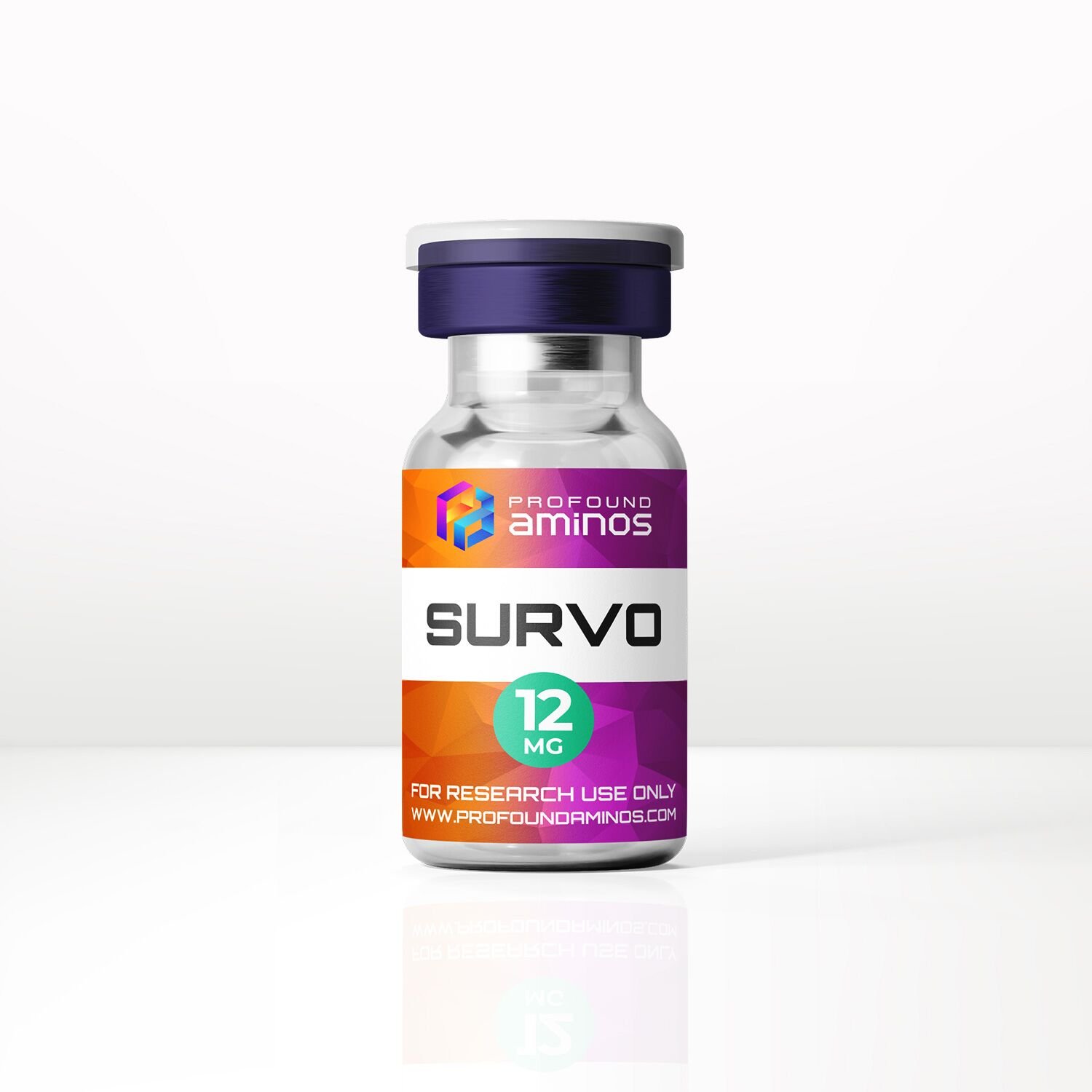
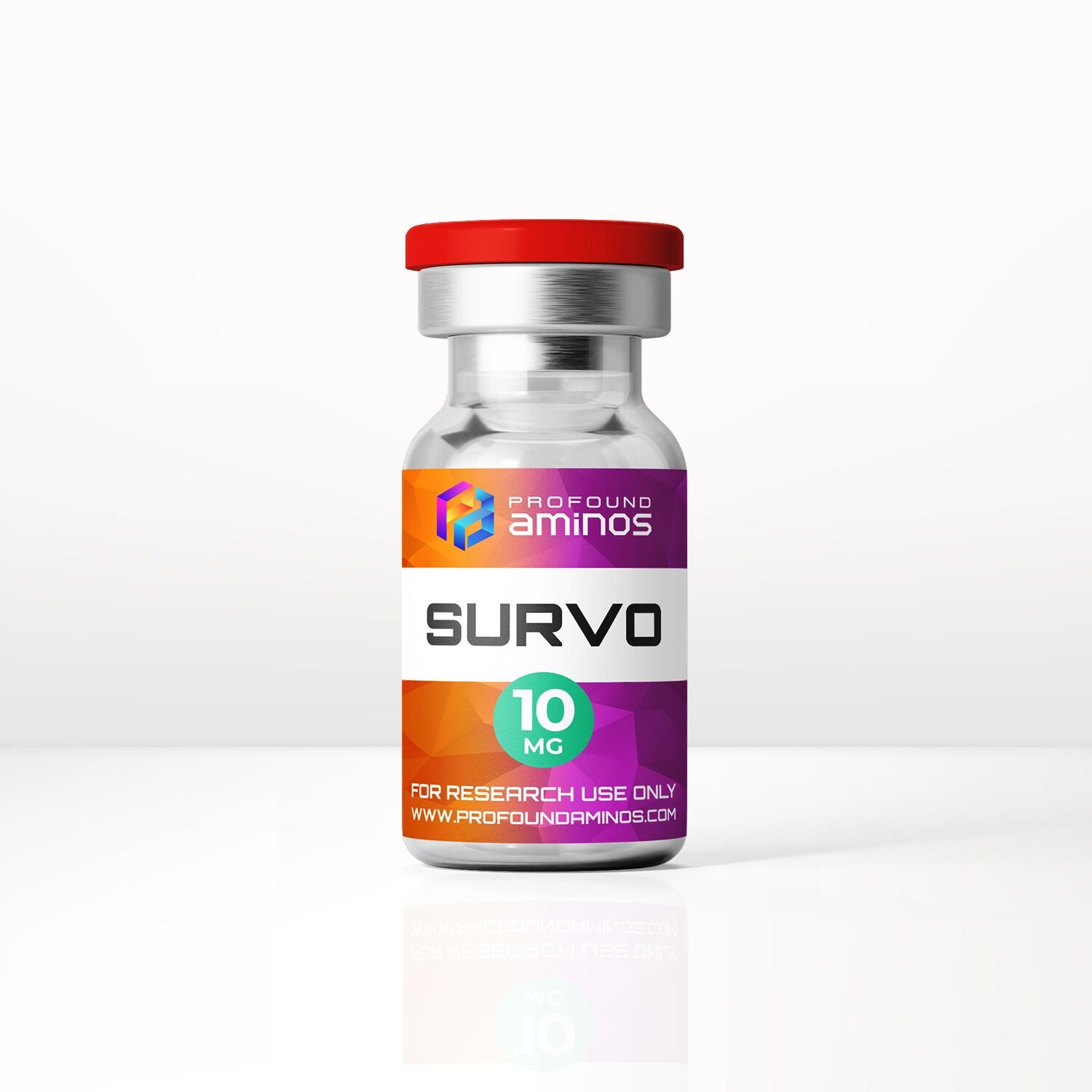
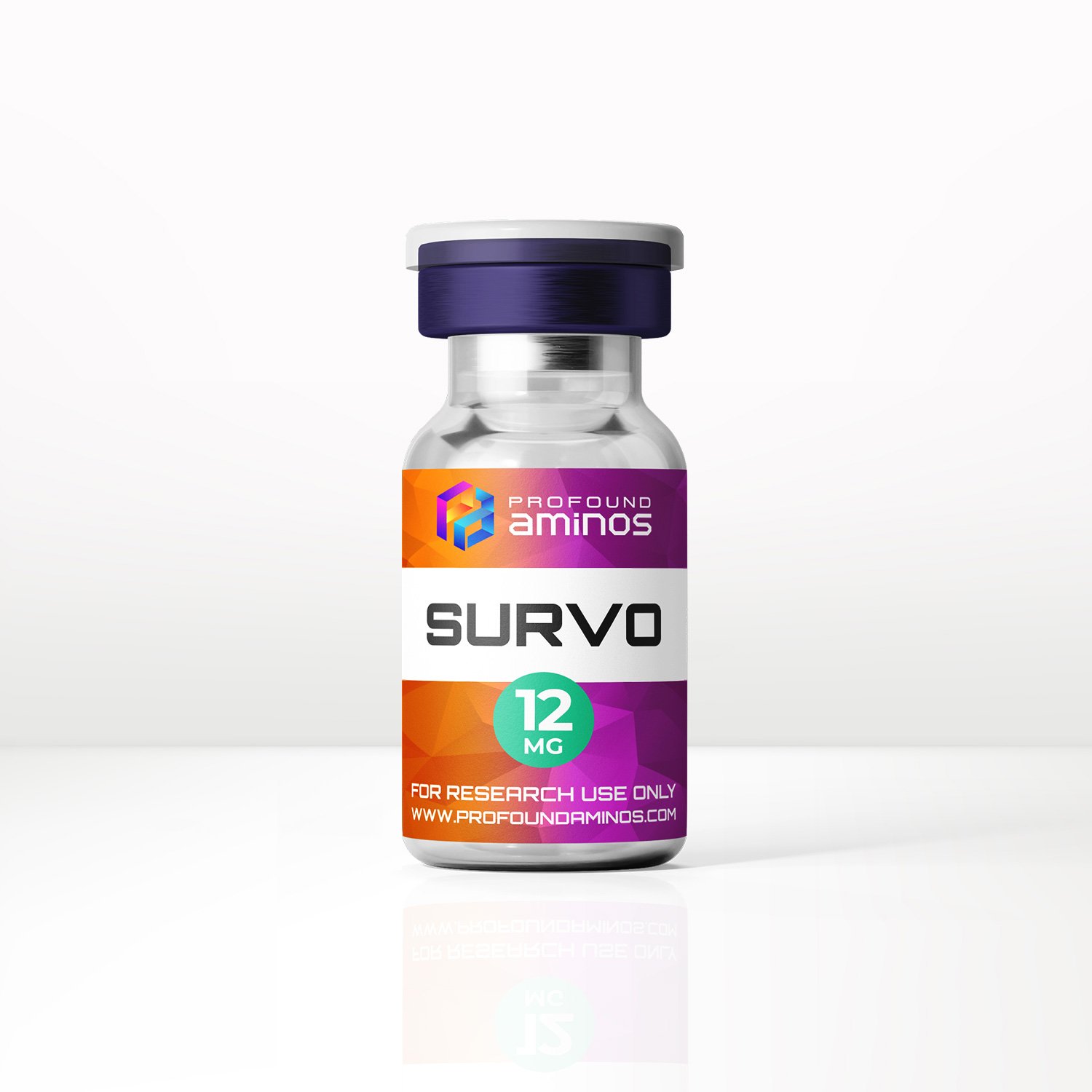
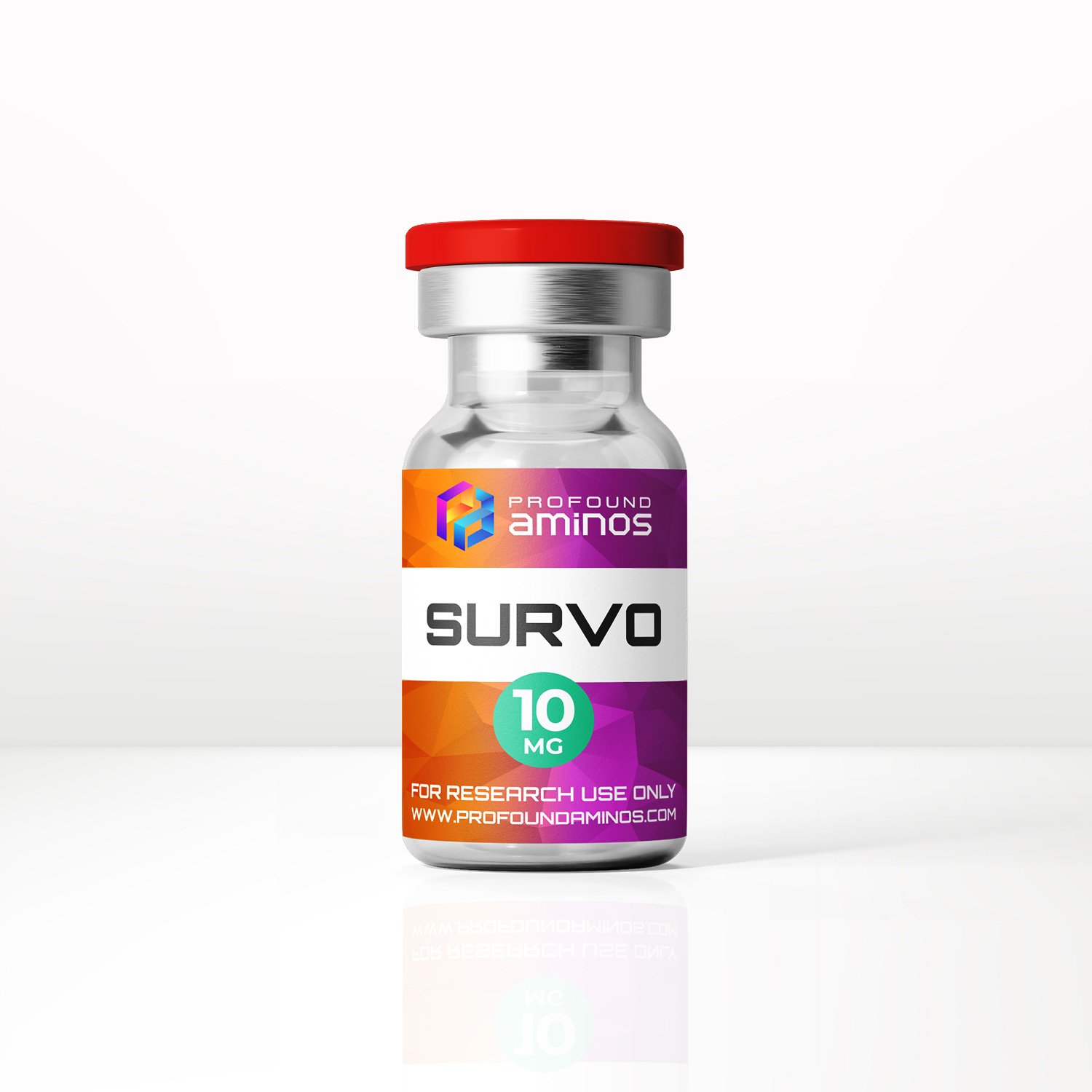
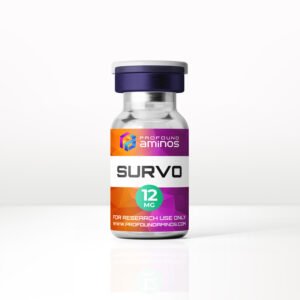
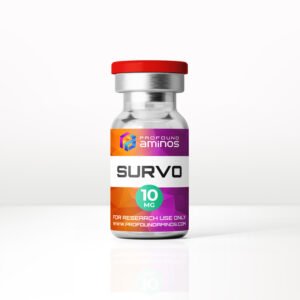
Survo
Price range: $79.00 through $99.00
Survo (BI 456906; CAS 2805997-46-8; PubChem CID 168429725) is a synthetic, acylated 29-amino-acid research peptide derived from the glucagon backbone, engineered as a dual agonist at glucagon receptors (GCGR) and GLP-1 receptors (GLP-1R). A C18 fatty diacid side chain at position 24, linked via a hydrophilic glycine-serine spacer, enables albumin binding for extended circulating presence and once-weekly research protocol administration. A non-coded amino acid (1-aminocyclobutane-1-carboxylic acid; Ac4c) at position 2 differentiates Survo from native glucagon and enhances receptor selectivity. Developed by Boehringer Ingelheim under licence from Zealand Pharma, Survo is in Phase 3 clinical research programmes (SYNCHRONIZE series for body-weight management; LIVERAGE programme for MASH) and holds FDA Breakthrough Therapy Designation for non-cirrhotic MASH with moderate to advanced fibrosis. It is not approved by the FDA for any indication as of March 2026. FOR RESEARCH USE ONLY. Not for consumption, human or animal administration, or any application outside a controlled non-clinical laboratory setting. Researchers require institutional approval, appropriate biosafety protocols, and batch COA documentation before any laboratory use.
Survo Dual Glucagon Receptor & GLP-1 Receptor Agonist (GCGR/GLP-1R)
TECHNICAL SPECIFICATIONS
| Property | Data |
|---|---|
| Product Reference | Survo (BI 456906) — Dual GCGR/GLP-1R Research Compound |
| Chemical Class | Acylated synthetic glucagon-analogue peptide — dual receptor agonist |
| Physical Format | Lyophilised powder — hermetically sealed research container |
| Analytical Purity (recommended) | ≥98% by RP-HPLC |
| Identity Confirmation | LC-MS — molecular weight (~4,232 Da) and sequence identity per batch COA |
| Reconstitution Buffer | Sterile aqueous buffer pH 6.0–7.5 (compatible with albumin-binding stability) |
| Storage — Lyophilised | −20°C or below, desiccated, light-protected, hermetically sealed |
| Storage — In Solution | −80°C; single-use research aliquots; avoid repeated freeze-thaw cycles |
| Regulatory Class | Research Use Only (RUO) — Not for administration to living organisms |
| Endotoxin Screening | <1.0 EU/mg (LAL assay) — required for preclinical model research quality |
| COA Requirement | Batch-specific: RP-HPLC purity + LC-MS identity + lot number + storage conditions + endotoxin data |
| Note on Lipidation Verification | LC-MS must confirm intact C18 fatty diacid conjugation — free peptide has different receptor pharmacology |
Disclaimer : For Research Use Only (RUO). Not for human use.
Product Overview
Discovery and Scientific Background :
Survo (BI 456906) was rationally designed to address a fundamental limitation of GLP-1 receptor mono-agonists: their primary impact on satiety and glycaemic control without directly targeting hepatic lipid metabolism and energy expenditure. By incorporating agonism at the glucagon receptor (GCGR) alongside GLP-1R activity, Survo aims to simultaneously engage satiety-mediating hypothalamic pathways (GLP-1R) and energy expenditure / hepatic fat oxidation pathways (GCGR)
The compound’s discovery and preclinical pharmacology were published by Zimmermann et al. (Molecular Metabolism, 2022), establishing nanomolar functional potency at both human GCGR and GLP-1R and demonstrating an albumin-binding C18 acyl modification supporting extended exposure in preclinical models. [R1] This foundational pharmacology motivated a clinical research programme now spanning Phase 1, Phase 2, and Phase 3 in obesity, type 2 diabetes, and MASH.
In the U.S. context, Survo has attracted regulatory attention beyond its clinical programme: a December 2024 FDA warning letter explicitly listed Survo among peptide products flagged for online sale to U.S. consumers — confirming that investigational peptides in the GLP-1/metabolic space are actively monitored within the broader enforcement ecosystem, regardless of approval status.
Molecular Architecture
Survo’s extended research protocol profile arises from three key structural decisions:
- Glucagon-based 29-amino-acid backbone — Provides the scaffold for dual GCGR/GLP-1R engagement. Native glucagon is a potent GCGR agonist but has negligible GLP-1R activity; the Survo sequence introduces modifications at multiple positions to confer GLP-1R agonism alongside GCGR activity.
- Ac4c at position 2 — The non-coded amino acid 1-aminocyclobutane-1-carboxylic acid (Ac4c) replaces the native position 2 residue, enhancing receptor selectivity and resistance to proteolytic degradation — a critical requirement for a long-acting research compound. [R1]
- C18 fatty diacid at position 24 — Conjugated via a hydrophilic glycine-serine linker, the C18 fatty diacid enables reversible albumin binding, reducing renal clearance and extending circulating half-life to support once-weekly research protocols.
LC-MS identity confirmation per batch COA must verify intact C18 acyl chain conjugation — the free (de-acylated) peptide has fundamentally different pharmacology and would not serve as a valid research tool for albumin-dependent GCGR/GLP-1R dual agonism studies.
Survo (BI 456906; CID 168429725) full molecular structure C192H289N47O61 29-residue dual GCGR/GLP-1R agonist showing glucagon-based peptide backbone, non-coded Ac4c residue at position 2, and C18 fatty diacid conjugation at position 24 via glycine-serine hydrophilic linker
Research Mechanism -2026 Laboratory Applications
All applications below are for non-clinical laboratory research use only. No endpoints listed constitute clinical protocols or human-use guidance.
1-Dual GCGR/GLP-1R Receptor Pharmacology Research
Survo’s defining feature is simultaneous nanomolar agonism at human GCGR and GLP-1R, confirmed in preclinical pharmacology (Zimmermann et al. 2022). [R1] Researchers use Survo to study mechanisms of dual receptor co-activation, signal integration downstream of GCGR-cAMP and GLP-1R-cAMP pathways, and how balanced dual agonism differs pharmacologically from selective GCGR or GLP-1R agonism. Research endpoints: cAMP reporter assays at human GCGR and GLP-1R; receptor competition binding (radioligand displacement); Gs-protein coupling kinetics; bias factor analysis comparing GCGR vs GLP-1R pathway activation ratios for Survo vs reference compounds.
2-Hepatic Lipid Metabolism and MASH Biology Research
GCGR activation is directly linked to hepatic lipid oxidation and glycogenolysis. Phase 2 research (Sanyal et al., NEJM 2024) established its basis for FDA Breakthrough Therapy Designation in non-cirrhotic MASH. Researchers use Survo in hepatic biology models to investigate GCGR-mediated lipid oxidation,supporting FDA Breakthrough Therapy Designation for non-cirrhotic MASH. Researchers use Survo in hepatic biology models to investigate GCGR-mediated lipid oxidation, hepatic steatosis signalling pathways, and the contribution of glucagon-receptor agonism to MASH-relevant cellular endpoints. Research endpoints: lipid accumulation assays (Oil Red O staining); hepatic triglyceride quantification; de novo lipogenesis marker expression (SREBP-1c, FAS, ACC); fibrosis marker panels (TGF-β, collagen I/IV, α-SMA); NAFLD activity score correlates in preclinical models.
3- Energy Expenditure Pathway Research
One mechanistic rationale for GCGR/GLP-1R co-agonism is that GCGR activation increases energy expenditure and thermogenesis — pathways not directly engaged by GLP-1R mono-agonists. Preclinical pharmacology (Zimmermann et al. 2022) demonstrated body-weight and adiposity reductions in animal models beyond those achievable with GLP-1R agonism alone. [R1] Research endpoints: indirect calorimetry in preclinical models; oxygen consumption and respiratory exchange ratio; uncoupling protein (UCP1, UCP3) expression; thermogenic gene panel (PGC-1α, PRDM16); adipose tissue browning markers.
4 – GLP-1 and Glucagon Receptor Signalling Interaction Studies
The molecular basis of synergistic vs additive vs antagonistic crosstalk between GLP-1R and GCGR intracellular pathways remains an active research area. Survo provides a single molecule that activates both receptor systems simultaneously, enabling research into shared second-messenger pathways (cAMP, PKA, CREB), cross-receptor phosphorylation events, and receptor internalisation/recycling dynamics under dual stimulation. [R1] Research endpoints: phospho-protein arrays for PKA substrates; CREB phosphorylation and transcriptional reporter assays; receptor internalisation kinetics (confocal imaging); beta-arrestin recruitment assays.
5 – Peptide Lipidation Chemistry and Albumin Binding Research
Survo’s C18 fatty diacid conjugation strategy represents one pharmacokinetic engineering approach among several being explored across the GLP-1/glucagon peptide class. Its C18 chain and glycine-serine hydrophilic spacer differ from semaglutide’s C18 conjugation at Lys26 and from cagrilintide’s C20 chain — providing a comparator for structure-PK relationship studies in lipidated peptide research. Research endpoints: albumin binding affinity and displacement kinetics (isothermal titration calorimetry; SPR); half-life characterisation in relevant research systems; comparative lipid chain hydrolysis stability studies; HPLC/LC-MS characterisation of acyl chain integrity.
6 – Analytical Chemistry and COA Verification Research
Survo’s molecular complexity (C₁₉₂H₂₈₉N₄₇O₆₁; ~4,232 Da; Ac4c non-coded residue; C18 acyl chain) requires multi-method analytical characterisation. Standard RP-HPLC purity cannot distinguish the intact lipidated compound from de-acylated impurities or sequence variants. [R2] Research endpoints: RP-HPLC purity profiling (C18 column, gradient elution); LC-MS full sequence and acyl chain verification; pH-dependent stability studies (aqueous buffer systems); ThT aggregation assay vs native glucagon; intact mass confirmation by high-resolution MS.
Structural & Chemistry Details
| Parameter | Detail |
|---|---|
| IUPAC / Chemical Class | Synthetic acylated dual GCGR/GLP-1R agonist peptide — glucagon backbone with C18 fatty diacid modification |
| CAS Registry | 2805997-46-8 |
| Development Code | BI 456906 |
| PubChem CID | 168429725 |
| Molecular Formula | C₁₉₂H₂₈₉N₄₇O₆₁ |
| Molecular Weight | ~4,232 g/mol |
| Peptide Length | 29 amino acids (glucagon-based backbone) |
| Key Modification at Position 2 | 1-aminocyclobutane-1-carboxylic acid (Ac4c) — enhances receptor selectivity and proteolytic stability |
| Lipidation | C18 fatty diacid side chain at position 24 via glycine-serine linker — supports albumin binding and extended half-life |
| Half-Life (PK research) | Once-weekly exposure profile observed in preclinical models and Phase 1 pharmacokinetic studies |
| Receptor Profile | Dual agonist: GCGR + GLP-1R — nanomolar functional potency at both human receptors |
| Functional Potency | Nanomolar activity at human GCGR and GLP-1R (literature-supported) |
| Developer | Boehringer Ingelheim (under licence from Zealand Pharma) |
| PubChem Structure Image | https://pubchem.ncbi.nlm.nih.gov/image/imgsrv.fcgi?cid=168429725&t=l (Public domain — NIH/NLM) |
PubChem Structure Image (Public Domain — NIH/NLM): https://pubchem.ncbi.nlm.nih.gov/image/imgsrv.fcgi?cid=168429725&t=l
Full Compound Page: https://pubchem.ncbi.nlm.nih.gov/compound/168429725
Alt Text for Structure Image: Survo (BI 456906; CID 168429725) full molecular structure — C192H289N47O61 — 29-residue dual GCGR/GLP-1R agonist showing glucagon-based peptide backbone, non-coded Ac4c residue at position 2, and C18 fatty diacid conjugation at position 24 via glycine-serine hydrophilic linker. Source: PubChem CID 168429725, NIH/NLM. For scientific research reference only. Not for human use.
Phase 2 & 3 Clinical Research Data Summary
All data from peer-reviewed publications and official ClinicalTrials.gov registrations. Scientific background only — not a product claim.
| Trial | Focus | Population | Duration | Key Research Outcome | Status (March 2026) |
|---|---|---|---|---|---|
| SYNCHRONIZE-2 | Obesity + T2D | Phase 3 | – | Efficacy/safety for body-weight reduction and glycaemic parameters in T2D | Ongoing — NCT registered |
| SYNCHRONIZE-CVOT | CVD / renal risk | Phase 3 | – | Cardiovascular outcome events — long-term safety/efficacy | Ongoing |
| SYNCHRONIZE-JP/CN | Regional populations | Phase 3 | – | Japanese/Chinese pharmacology and efficacy characterisation | Ongoing |
| LIVERAGE | MASH — fibrosis stage 2–3 | Phase 3 | – | MASH resolution and fibrosis improvement in non-cirrhotic patients | Ongoing — Breakthrough Therapy Designation |
| LIVERAGE-Cirrhosis | MASH + compensated cirrhosis | Phase 3 | – | Safety/efficacy in compensated cirrhosis due to MASH | Ongoing |
| Phase 2 (le Roux 2024) | Obesity — no T2D | Phase 2 | 46 weeks | Body-weight reductions: −6.2%, −12.5%, −13.2%, −14.9% (dose-dependent) vs −2.8% placebo | Completed — Lancet D&E 2024 |
| Phase 2 (Sanyal 2024) | MASH + fibrosis F1–F3 | Phase 2 | – | MASH resolution ~62–64%; significant liver fat reduction; supports FDA BTD | Completed — NEJM 2024 |
Key publications: le Roux et al. (Lancet Diabetes Endocrinol 2024) [R5]; Sanyal et al. (N Engl J Med 2024) Lawitz et al. (J Hepatology 2024) [R7]; Zimmermann et al. (Molecular Metabolism 2022) Blüher et al. (Diabetologia 2024)
Comparative Research Context — 2026 GCGR/GLP-1R Peptide Landscape
All compounds below are investigational or approved drugs. No comparison constitutes a product claim. Scientific research context only.
| Feature | Survo (BI 456906) | Semaglutide | Tirzepatide | Retatrutide |
|---|---|---|---|---|
| Receptor Profile | GCGR + GLP-1R (dual agonist) | GLP-1R only | GLP-1R + GIPR (dual) | GLP-1R + GIPR + GCGR (triple) |
| Peptide Backbone | Glucagon-based (29 AA) | GLP-1 analogue | GIP/GLP-1 chimera | GLP-1/GIP/glucagon chimera |
| Lipidation | C18 fatty diacid at position 24 via linker | C18 fatty acid (Lys26 conjugation) | C20 fatty diacid | C18 fatty diacid |
| Key Modification | Ac4c at position 2 (non-coded AA) | Arg34, Lys26(C18-γGlu) | Peptide chimera at GIP-N | Multiple receptor-biasing modifications |
| CAS | 2805997-46-8 | 910463-68-2 | 2023788-19-2 | 2381089-83-2 |
| PubChem CID | 168429725 | 56843331 | 156588324 | 171390338 |
| MW | ~4,232 g/mol | ~4,114 g/mol | ~4,813 g/mol | ~4,845 g/mol |
| Hepatic Focus (MASH) |  Primary indication (BTD) Primary indication (BTD) |
Limited data | Limited data | Emerging data |
| Research Protocol Frequency | Once-weekly (Phase 2/3 research programmes) | Once-weekly | Once-weekly | Once-weekly Phase 2 |
| Body-Wt Reduction Data | Up to −14.9% at 46 weeks (4.8 mg vs −2.8% placebo) | −14.9% STEP 1, 68 wks | −20.9% SURMOUNT-1, 72 wks | −24.2% at 48 wks |
| USA FDA Status (March 2026) | Investigational — not approved; RUO only | Approved (Ozempic/Wegovy) | Approved (Mounjaro/Zepbound) | Investigational — Phase 3 |
| Compounding (FDA 2026) | No established compounding basis; unapproved | Shortage/compounding restrictions 2024–2026 | Compounding restrictions 2024–2026 | Explicitly named by FDA — cannot be compounded |
Why Source Matters — 3 Critical Quality Criteria
1-Acyl Chain Integrity Verification — Not Just HPLC Purity
Standard RP-HPLC purity confirms bulk peptide content but cannot distinguish intact Survo (with its C18 fatty diacid conjugation) from the de-acylated apo-peptide. The acyl chain is the pharmacokinetic engineering element that confers albumin binding and extended half-life — the core differentiator enabling once-weekly research protocols. A research compound that has undergone hydrolysis of the acyl linkage will have fundamentally different pharmacology, PK properties, and receptor-binding kinetics. COA must include LC-MS molecular weight confirmation (~4,232 Da, intact) as a non-negotiable analytical requirement. [R2]
2-Ac4c Residue Verification and Sequence Confirmation
The Ac4c non-coded amino acid at position 2 is a critical receptor selectivity determinant. Peptide synthesis errors or substitution of this residue with a standard amino acid would produce a structurally similar but pharmacologically distinct compound. LC-MS sequence confirmation or tandem MS/MS fragmentation analysis capable of distinguishing Ac4c from adjacent residues is required for research-grade supply. Without this, researchers cannot confirm that what they are studying is pharmacologically equivalent to the Survo described in Zimmermann et al. [R1]
3-Cold-Chain Integrity and Endotoxin Documentation
Acylated peptide research compounds are sensitive to thermal degradation (acyl chain hydrolysis) and oxidative degradation at both the Ac4c residue and the C18 fatty diacid linkage. Lyophilised storage at −20°C or below under desiccated, hermetically sealed, light-protected conditions is required. Batch COA must include endotoxin data (<1.0 EU/mg by LAL assay) for any preclinical model research use. Cold-chain documentation from manufacture through delivery is a marker of supply chain credibility. Suppliers without verifiable cold-chain controls should be considered unsuitable for research-grade Survo supply.
REGULATORY & COMPLIANCE STATEMENT (RUO)
| Classification Detail | Description / Notes |
|---|---|
| Regulatory Status | Research Use Only (RUO) — U.S. Federal Framework FDA Status (March 2026): Investigational — no FDA-approved Survo product exists in the USA. NDA/BLA filing projected no earlier than late 2026–2027 for obesity indication. Breakthrough Therapy Designation: Granted for non-cirrhotic MASH with moderate to advanced fibrosis — does not constitute approval. |
| RUO Intended Use | Non-clinical laboratory research: dual GCGR/GLP-1R receptor binding studies, energy expenditure pathway characterisation, hepatic lipid metabolism research models, structure-activity relationship studies. |
| Not a Drug Product | Not evaluated by FDA for safety or efficacy in any clinical application. |
| Not a Supplement | Not a dietary supplement, nutraceutical, or consumer product. |
| Compounding Position | No established compounding basis under federal law. Promoting or supplying Survo as a compounded product would constitute misbranding of an unapproved new drug. |
| Intended Use Doctrine | RUO labels do not override marketing context. FDA warning letters (Dec 2024 — Survo explicitly listed among peptide products flagged for online sale) confirm totality-of-evidence assessment. |
| Google Ads (March 2026) | Healthcare and medicines policy: no ads implying human outcomes for unapproved substances. Policy help articles reorganised March 31, 2026 — enforcement unchanged. Avoid all product-linked health claims. |
| Google Search (March 2026) | Spam update (March 24, 2026 — SpamBrain): scaled AI content, thin health pages, cloaking penalised. Core update: YMYL health content requires E-E-A-T: authorship, dates, primary citations, zero promissory health language. |
| FTC Compliance | Health Products Compliance Guidance: all health-related claims must be truthful, non-misleading, and supported by competent scientific evidence. Applies to implied as well as explicit claims. |
| RUO Safe Wording (FDA-aligned) | “Supplied solely for non-clinical laboratory research by qualified professionals. Not intended for use in humans or animals. Not for diagnostic use. No claims are made regarding safety, effectiveness, or suitability for any medical or consumer purpose.” |
| Phrases to Avoid | weight loss / fat burning / appetite suppression / for obesity / for MASH / for diabetes / dose / how to administer / protocol / cycle / same as prescription / clinically proven / I lost… |
| PPE / Lab Safety | Handle as bioactive synthetic peptide. Standard laboratory PPE required. Refer to SDS for batch-specific safety data before any laboratory use. |
FOR RESEARCH USE ONLY. NOT FOR HUMAN OR ANIMAL APPLICATION.
STRICT PROHIBITION : Distributing, promoting, or using this research compound for any application involving administration to living organisms outside formally approved institutional research protocols is strictly prohibited under U.S. federal law. FDA warning letters (Summit Research Peptides Dec 2024; FDA Roundup Dec 2024 — Survo explicitly listed) confirm that ‘research use only’ labelling does not shield products from drug-misbranding enforcement where the overall marketing context implies human use. Survo is an unapproved investigational peptide — any promotion as a therapeutic agent constitutes marketing an unapproved new drug under the FD&C Act.
These statements have not been evaluated by the Food and Drug Administration. This product is not intended to diagnose, treat, cure, or prevent any disease.
Frequently Asked Questions
Q1: Is Survo intended for consumption or human administration?
No. Survo (BI 456906) is strictly a Research Use Only (RUO) laboratory research compound. It is not approved, labelled, or intended for consumption, administration, or any diagnostic application. Purchase confirms institutional laboratory research use only. Any human-use promotion violates U.S. federal law. A December 2024 FDA warning letter explicitly listed Survo among products flagged for online sale to U.S. consumers — confirming active regulatory monitoring.
Q2: What is Survo’s current FDA regulatory status?
Survo has no FDA marketing authorisation as of March 2026. It is an investigational compound in Phase 3 clinical research programmes (SYNCHRONIZE, LIVERAGE). It holds FDA Breakthrough Therapy Designation for non-cirrhotic MASH with moderate to advanced fibrosis — which is a research designation facilitating development, not an approval. An NDA/BLA filing for the obesity indication is projected no earlier than late 2026–2027. There is no established compounding basis for Survo under federal law.
Q3: What analytical data is required per batch COA?
Research-grade batch COA must include: (1) RP-HPLC purity ≥98%; (2) LC-MS full molecular weight confirmation (~4,232 Da intact with C18 acyl chain); (3) sequence identity including Ac4c at position 2; (4) lot number for full traceability; (5) storage conditions and stability data; (6) endotoxin screening <1.0 EU/mg by LAL assay. LC-MS is non-optional given the pharmacologically critical non-coded amino acid and acyl chain modifications.
Q4: How does Survo differ from semaglutide and tirzepatide?
Semaglutide is a GLP-1R mono-agonist (no GCGR activity). Tirzepatide is a GIP/GLP-1R dual agonist (no GCGR activity). Survo is a GCGR/GLP-1R dual agonist — its glucagon receptor component is specifically directed at hepatic lipid oxidation and energy expenditure pathways not targeted by the other two compounds. This makes Survo pharmacologically distinct for research into MASH biology and GCGR-mediated metabolism ,it is not a research substitute for semaglutide or tirzepatide tools.
Q5: What reconstitution conditions are recommended?
Sterile aqueous buffer at pH 6.0–7.5 is appropriate for most laboratory assay systems. Survo’s C18 fatty acid chain is pH-stable in neutral-to-slightly-alkaline aqueous conditions. Avoid thiol-containing buffers (DTT, BME) that may reduce the fatty diacid linkage. Reconstituted research solutions should be aliquoted for single-use protocols and stored at −80°C. Avoid repeated freeze-thaw cycles, which accelerate peptide aggregation and acyl chain hydrolysis.
Q6: What Phase 2 research data exists for Survo ?
Phase 2 concentration-response research (le Roux et al., Lancet Diabetes Endocrinol 2024; NCT04667377) in adults with obesity without diabetes reported mean body-weight changes at 46 weeks of −6.2%, −12.5%, −13.2%, and −14.9% for 0.6, 2.4, 3.6, and 4.8 mg concentration groups respectively, versus −2.8% for placebo — confirming concentration-dependent pharmacological effects. [R5] Phase 2 MASH data (Sanyal et al., N Engl J Med 2024) showed MASH resolution in approximately 62–64% of study participants with fibrosis F1–F3 alongside significant liver fat reduction. [R6] Head-to-head Phase 2 data in T2D (Blüher et al. 2024) showed greater body-weight reductions vs semaglutide at 16 weeks.
Q7: What is the Ac4c modification and why does it matter?
1-Aminocyclobutane-1-carboxylic acid (Ac4c) is a non-coded (non-standard) amino acid introduced at position 2 of the glucagon backbone in Survo . It replaces the native serine at position 2, which is the primary DPP-4 cleavage site for glucagon. This substitution confers proteolytic stability against DPP-4 degradation while simultaneously modulating receptor selectivity. Pharmacologically, Ac4c at position 2 is a key structural determinant of Survo’s dual GCGR/GLP-1R profile — native glucagon has negligible GLP-1R activity. LC-MS confirmation must resolve this residue distinctly.
Q8: What Google and FDA compliance requirements apply to Survo content in 2026?
FDA: Intended-use doctrine applies regardless of RUO disclaimers. Any Survo content implying body-weight management outcomes, MASH improvement, or metabolic benefits for human use will be evaluated against the totality of marketing context. FDA has explicitly flagged Survo in enforcement contexts (Dec 2024 warning letter documentation). [R13] Google: March 2026 spam update (SpamBrain) and concurrent core update target thin health AI content, cloaking, and YMYL pages without E-E-A-T signals. Healthcare and medicines advertising policies prohibit promotion of unapproved substances with implied human outcomes. [R16, R17] Safe content: primary citations, scientific language, dated authorship, zero promissory outcome language, ScholarlyArticle schema only.
Q9: What phrases must be avoided on Survo RUO content?
Per FDA enforcement themes and Google’s 2026 quality standards, avoid: ‘weight loss’, ‘fat burning’, ‘appetite suppression’, ‘for obesity’, ‘for MASH’, ‘for liver disease’, ‘for diabetes’, ‘anti-obesity’, ‘metabolic booster’, ‘same as semaglutide’, ‘clinically proven’, any reference to concentration/research protocol frequency as a ‘dose’, any testimonials implying personal health outcomes, and any transformation imagery or before/after content. These patterns constitute evidence of intended human use under FDA’s intended-use doctrine and trigger Google’s YMYL quality enforcement.
Q10: Can Survo be used in preclinical model research?
Only within formally approved institutional research protocols (IACUC-approved for animal models; full IRB/ethics review for any human-adjacent research). Published preclinical pharmacology (Zimmermann et al. 2022) was conducted under formally regulated research frameworks. [R1] Any use outside institutionally approved, ethics-reviewed, biosafety-compliant research protocols is outside the scope of RUO classification. Verify all institutional biosafety, IACUC, ethics board, and applicable regulatory requirements before any preclinical model research protocol involving Survo.
Key References — 20 Peer-Reviewed & Official Sources
All references are primary peer-reviewed literature or official FDA/FTC/Google regulatory disclosures. No secondary aggregators. Verified through March 2026.
| Ref | Authors | Year | Source | Key Data / Relevance |
|---|---|---|---|---|
| R1 | Zimmermann T et al. | 2022 | Molecular Metabolism | BI 456906 discovery & preclinical pharmacology — dual GCGR/GLP-1R design, nanomolar potency, C18 albumin binding |
| R2 | Jungnik A et al. | 2023 | Diabetes Obes Metab | Phase 1 studies — safety, tolerability, PK/PD in overweight/obesity cohorts |
| R3 | Yazawa R et al. | 2023 | Diabetes Obes Metab | Phase 1 randomized study in Japanese men — concentration-response over 16 weeks |
| R4 | Blüher M et al. | 2024 | Diabetologia | Phase 2 dose-response — Survo vs placebo and semaglutide in T2D (HbA1c & body weight) |
| R5 | le Roux CW et al. | 2024 | Lancet Diabetes Endocrinol | Phase 2 obesity trial — −14.9% at 4.8 mg vs −2.8% placebo at 46 weeks |
| R6 | Sanyal AJ et al. | 2024 | N Engl J Med | Phase 2 MASH trial — resolution ~62–64%; basis for FDA Breakthrough Therapy |
| R7 | Lawitz EJ et al. | 2024 | J Hepatology | PK and tolerability in cirrhosis cohorts — supports LIVERAGE-Cirrhosis program |
| R8 | Wilding JPH et al. | 2021 | N Engl J Med (STEP 1) | Semaglutide 2.4 mg — anchor obesity dataset and US market context |
| R9 | Jastreboff AM et al. | 2022 | N Engl J Med (SURMOUNT-1) | Tirzepatide comparator — dual GIP/GLP-1R vs Survo profile |
| R10 | Jastreboff AM et al. | 2023 | N Engl J Med | Retatrutide Phase 2 — triple agonist comparator; FDA compounding restrictions context |
| R11 | Strosberg J et al. | 2017 | N Engl J Med (NETTER-1) | 177Lu-Dotatate PRRT — peptide oncology market comparator |
| R12 | FDA | Dec 2024 | Warning Letter — Summit Research Peptides | RUO labels do not override intended-use inference |
| R13 | FDA | Dec 2024 | FDA Roundup (Dec 17, 2024) | Survo listed among peptide products flagged for online sale |
| R14 | FDA | Feb 2026 | Unapproved GLP-1 Drugs Notice | Illegal online sale of GLP-1 related products; misuse of “research use only” claims |
| R15 | FDA | Mar 2026 | Compounding Bulks Page Update | 503A/503B restrictions; supply-chain compliance and shortage limitations |
| R16 | Mar 2026 | Healthcare & Medicines Policy Update | Restrictions on unapproved pharmaceuticals; enforcement unchanged | |
| R17 | Mar 2026 | Spam + Core Update | SpamBrain penalties; E-E-A-T required for YMYL health content | |
| R18 | FTC | Dec 2022 | Health Products Compliance Guidance | Health claims must be truthful, non-misleading, evidence-based |
| R19 | CDC (NCHS) | Sep 2024 | Data Brief 508 | US adult obesity prevalence 40.3% (2021–2023) |
| R20 | PubChem (NIH) | Current | CID 168429725 | Survo structural data |
RESEARCH USE ONLY — NOT FOR HUMAN USE — NOT FOR ANIMAL USE
All content for scientific education and non-clinical laboratory reference only | No medical claims made or implied | Compiled through March 2026
| Strength |
10mg |
|---|---|
| Strength |
10mg, 12mg |
DISCLAIMER:
- Products sold on our website are meant for scientific research purposes only, designed for in vitro testing and lab experimentation exclusively. These products are not intended to be used as foods, drugs or cosmetics, any sort of bodily introduction of the products into humans or animals is strictly prohibited. They must also not be misbranded, misused, or mislabeled, or used for anything other than research and scientific investigation.
- All the products you see on the website are being sold in a lyophilized powder state (freeze-dried), in a sealed sterile vial; and should be reconstituted.
The product’s label clearly states the amount of product a vial contains; some products are offered in different variations. - The products we are selling come in a sealed vial but require additional lab equipment for proper testing.
- Though we make sure packaging, label, seals and writing does not differ from the product photos you see on our website, there is a chance for a minimal deviation.
Frequently bought together: CagriTirz, ARA-290 10mg, VIP
Related products
Research Compounds
Research Compounds
Research Compounds